High-Protein Meal Plan
This 7-day plan at about 1,800 calories a day is built around protein foods at every meal, with the protein in each meal and each day calculated from USDA data. Days come out at roughly 130 to 155 grams of protein, which is within the National Academies’ acceptable range of 10 to 35% of calories. It is an example, not a prescription.
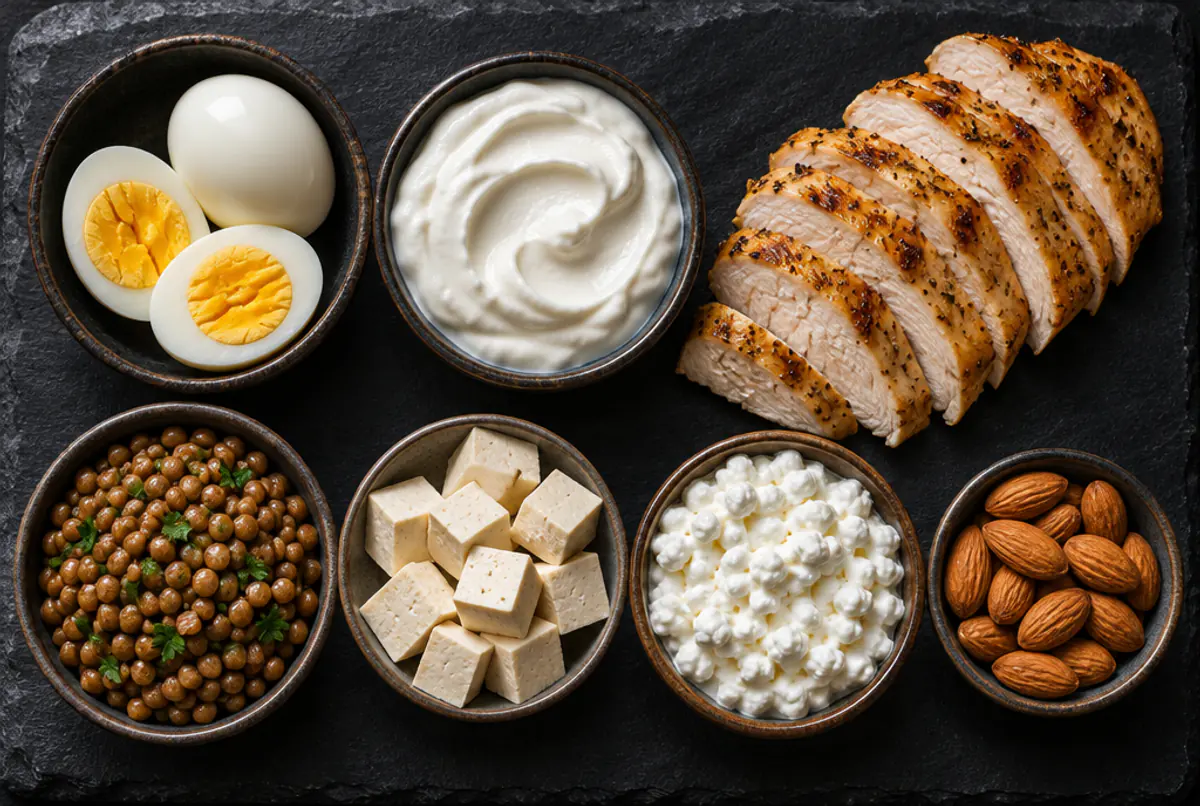
The seven days at a glance
| Day | Calories | Protein (g) | Carbs (g) | Fat (g) | Fiber (g) |
|---|---|---|---|---|---|
| Day 1 | 1,788 | 142 | 194 | 54 | 42 |
| Day 2 | 1,797 | 146 | 186 | 54 | 37 |
| Day 3 | 1,811 | 133 | 172 | 72 | 39 |
| Day 4 | 1,791 | 135 | 207 | 52 | 33 |
| Day 5 | 1,801 | 156 | 174 | 55 | 39 |
| Day 6 | 1,796 | 131 | 181 | 65 | 39 |
| Day 7 | 1,810 | 132 | 196 | 62 | 40 |
| Average | 1,799 | 139 | 187 | 59 | 38 |
Estimates based on USDA FoodData Central, worked out by our recipe engine each time the site is built (how we calculate). Each day is about 1,800 calories. Sodium excludes any salt you add. Amounts are cooked weights unless a food is described as dry.
Day 1: about 1,800 calories
Breakfast: Greek yogurt with oats and blueberries (517 calories, 34 g protein)
- Greek yogurt, low-fat: 230 g
- Rolled oats (dry): 55 g
- Blueberries: 85 g
- Almonds: 16 g
Lunch: Chicken, lentil and spinach bowl (519 calories, 54 g protein)
- Roast chicken breast: 115 g
- Lentils (cooked): 170 g
- Spinach: 70 g
- Tomato: 105 g
- Olive oil: 11 g
Dinner: Salmon with potato and broccoli (529 calories, 40 g protein)
- Salmon (cooked): 140 g
- Baked potato: 195 g
- Broccoli (boiled): 170 g
Snack: Cottage cheese with pear (222 calories, 14 g protein)
- Cottage cheese, 2%: 130 g
- Pear: 205 g
Day 2: about 1,800 calories
Breakfast: Eggs on toast with an orange (420 calories, 24 g protein)
- Hard-boiled egg: 110 g
- Whole-wheat bread: 70 g
- Orange: 155 g
Lunch: Tuna and bean salad (592 calories, 48 g protein)
- Tuna, canned in water: 155 g
- Chickpeas (cooked): 145 g
- Romaine lettuce: 65 g
- Tomato: 100 g
- Olive oil: 11 g
- Whole-wheat bread: 35 g
Dinner: Chicken with sweet potato and carrots (590 calories, 51 g protein)
- Roast chicken breast: 145 g
- Baked sweet potato: 220 g
- Carrots: 135 g
- Olive oil: 11 g
Snack: Greek yogurt with strawberries (196 calories, 23 g protein)
- Greek yogurt, low-fat: 220 g
- Strawberries: 110 g
Day 3: about 1,800 calories
Breakfast: Cottage cheese with berries and almonds (415 calories, 29 g protein)
- Cottage cheese, 2%: 170 g
- Strawberries: 100 g
- Almonds: 14 g
- Whole-wheat bread: 65 g
Lunch: Chicken and quinoa bowl (549 calories, 47 g protein)
- Roast chicken breast: 120 g
- Quinoa (cooked): 185 g
- Cucumber: 100 g
- Red pepper: 100 g
- Olive oil: 10 g
Dinner: Tofu and lentil stir-fry with rice (639 calories, 46 g protein)
- Firm tofu: 180 g
- Lentils (cooked): 100 g
- Brown rice (cooked): 100 g
- Broccoli (boiled): 150 g
- Olive oil: 10 g
Snack: Hard-boiled egg and carrots (208 calories, 10 g protein)
- Hard-boiled egg: 50 g
- Carrots: 120 g
- Almonds: 14 g
Day 4: about 1,800 calories
Breakfast: Greek yogurt with oats and blueberries (463 calories, 30 g protein)
- Greek yogurt, low-fat: 205 g
- Rolled oats (dry): 50 g
- Blueberries: 75 g
- Almonds: 14 g
Lunch: Chicken and quinoa bowl (564 calories, 49 g protein)
- Roast chicken breast: 125 g
- Quinoa (cooked): 190 g
- Cucumber: 100 g
- Red pepper: 100 g
- Olive oil: 10 g
Dinner: Lean beef with pasta and spinach (565 calories, 43 g protein)
- Lean ground beef (cooked): 100 g
- Whole-wheat pasta (cooked): 205 g
- Spinach: 60 g
- Tomato: 90 g
Snack: Cottage cheese with pear (199 calories, 13 g protein)
- Cottage cheese, 2%: 115 g
- Pear: 185 g
Day 5: about 1,800 calories
Breakfast: Eggs on toast with an orange (445 calories, 25 g protein)
- Hard-boiled egg: 115 g
- Whole-wheat bread: 75 g
- Orange: 165 g
Lunch: Chicken, lentil and spinach bowl (534 calories, 54 g protein)
- Roast chicken breast: 115 g
- Lentils (cooked): 175 g
- Spinach: 70 g
- Tomato: 105 g
- Olive oil: 12 g
Dinner: Chicken with sweet potato and carrots (618 calories, 52 g protein)
- Roast chicken breast: 150 g
- Baked sweet potato: 230 g
- Carrots: 140 g
- Olive oil: 12 g
Snack: Greek yogurt with strawberries (205 calories, 24 g protein)
- Greek yogurt, low-fat: 230 g
- Strawberries: 115 g
Day 6: about 1,800 calories
Breakfast: Cottage cheese with berries and almonds (458 calories, 33 g protein)
- Cottage cheese, 2%: 190 g
- Strawberries: 110 g
- Almonds: 16 g
- Whole-wheat bread: 70 g
Lunch: Tuna and bean salad (592 calories, 48 g protein)
- Tuna, canned in water: 155 g
- Chickpeas (cooked): 145 g
- Romaine lettuce: 65 g
- Tomato: 100 g
- Olive oil: 11 g
- Whole-wheat bread: 35 g
Dinner: Salmon with potato and broccoli (513 calories, 39 g protein)
- Salmon (cooked): 135 g
- Baked potato: 190 g
- Broccoli (boiled): 165 g
Snack: Hard-boiled egg and carrots (233 calories, 12 g protein)
- Hard-boiled egg: 55 g
- Carrots: 135 g
- Almonds: 16 g
Day 7: about 1,800 calories
Breakfast: Greek yogurt with oats and blueberries (456 calories, 29 g protein)
- Greek yogurt, low-fat: 195 g
- Rolled oats (dry): 50 g
- Blueberries: 75 g
- Almonds: 14 g
Lunch: Chicken and quinoa bowl (535 calories, 45 g protein)
- Roast chicken breast: 115 g
- Quinoa (cooked): 180 g
- Cucumber: 100 g
- Red pepper: 100 g
- Olive oil: 10 g
Dinner: Tofu and lentil stir-fry with rice (630 calories, 45 g protein)
- Firm tofu: 175 g
- Lentils (cooked): 100 g
- Brown rice (cooked): 100 g
- Broccoli (boiled): 145 g
- Olive oil: 10 g
Snack: Cottage cheese with pear (189 calories, 12 g protein)
- Cottage cheese, 2%: 110 g
- Pear: 175 g
What high-protein means here
The protein per meal is shown with each meal below. A day in this plan is about 130 to 155 g of protein, which works out to roughly 29 to 35% of calories. The upper end sits at the top of the National Academies’ acceptable range, so we have not gone higher. For comparison the RDA is 0.8 g per kg, and the Dietary Guidelines describe 1.2 to 1.6 g per kg.
Foods used
Greek yogurt, cottage cheese, eggs, chicken, fish, tofu, lentils, chickpeas and lean beef, with vegetables, fruit, whole grains and a little olive oil. See the high-protein foods chart for more options, and the protein intake calculator for a target based on your weight.
Macro Calculator: Set your own protein target, at 1.2 g per kg or another split.
Questions people ask
How much protein do I need?
The RDA for adults is 0.8 g per kg of body weight a day. The 2025–2030 Dietary Guidelines describe 1.2 to 1.6 g per kg a day, with protein foods at every meal. See the protein intake calculator.
Is more protein always better?
Not according to our sources: the National Academies’ acceptable range tops out at 35% of calories. Talk to a clinician if you have a medical condition or special diet.