Iron-Rich Foods Chart
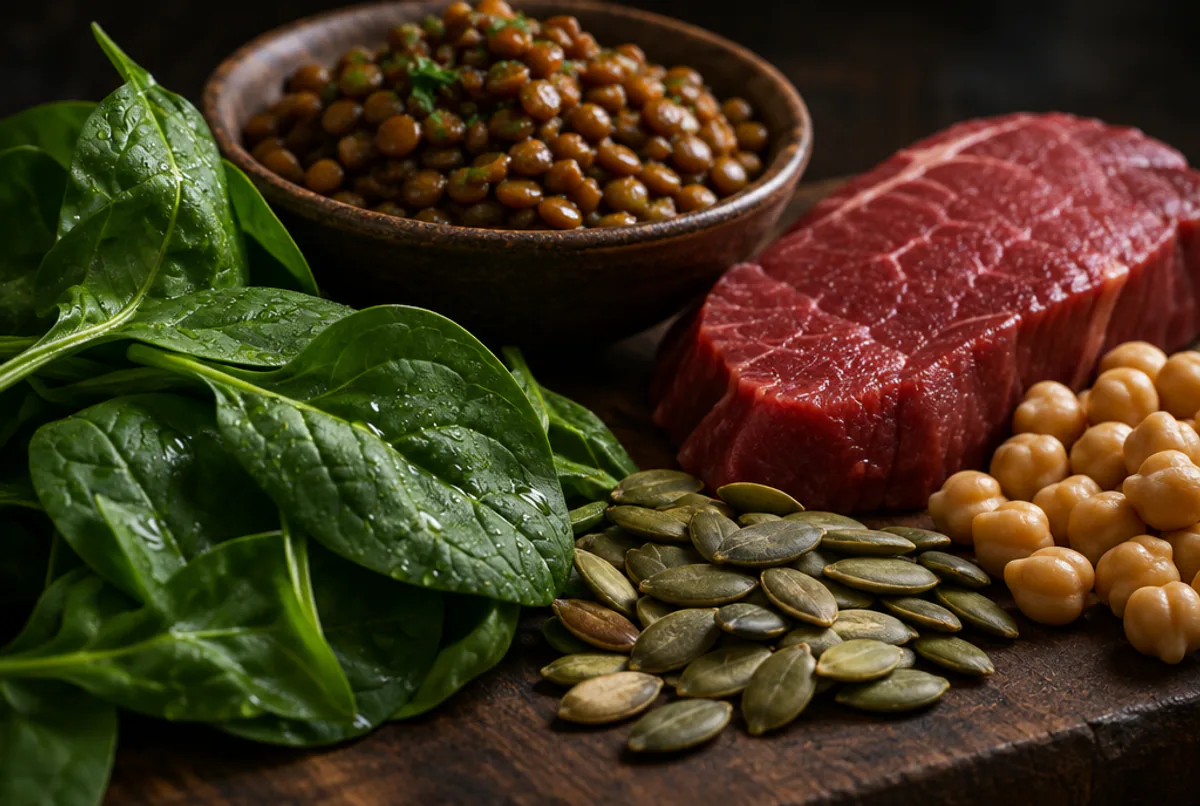
The table ranks foods by iron per 100 g by default. Switch to per typical portion to see what a usual serving gives; each row shows the USDA portion used. Sesame and other seeds, shellfish such as clams, oysters and mussels, and soy foods rank highest per 100 g; natto, tofu and other soy foods rank near the top per typical portion. Some foods are fortified.
| Seeds, sesame butter, paste | 1 tbsp (16 g) | 19 | 3.1 |
| Seeds, sesame seeds, whole, roasted and toasted | 1 oz (28 g) | 15 | 4.2 |
| Mollusks, clam, mixed species, cooked, breaded and fried | 1 oz (28 g) | 14 | 3.9 |
| Mushrooms, morel, raw | 1 cup (66 g) | 12 | 8 |
| Mollusks, octopus, common, cooked, moist heat | 1 oz (28 g) | 9.5 | 2.7 |
| Mollusks, oyster, eastern, wild, cooked, moist heat | 1 oz (28 g) | 9.2 | 2.6 |
| Natto | 1 cup (175 g) | 8.6 | 15 |
| Seeds, pumpkin and squash seed kernels, roasted, with salt added | 1 cup (118 g) | 8.1 | 9.5 |
| Seeds, hemp seed, hulled | 1 tbsp (10 g) | 8 | 0.8 |
| Seeds, sesame seed kernels, toasted, with salt added (decorticated) | 1 cup (128 g) | 7.8 | 10 |
| Seeds, sunflower seed kernels, toasted, with salt added | 1 cup (134 g) | 6.8 | 9.1 |
| Mollusks, mussel, blue, cooked, moist heat | 1 oz (28 g) | 6.7 | 1.9 |
| Nuts, cashew nuts, raw | 1 oz (28 g) | 6.7 | 1.9 |
| Olives, ripe, canned (small-extra large) | 1 tbsp (8 g) | 6.3 | 0.5 |
| Parsley, fresh | 1 cup chopped (60 g) | 6.2 | 3.7 |
| Seeds, flaxseed | 1 tbsp, whole (10 g) | 5.7 | 0.6 |
| Soybean, curd cheese | 1 cup (225 g) | 5.6 | 13 |
| Emu, oyster, raw | 1 oz (28 g) | 5.5 | 1.6 |
| Beef, plate steak, boneless, outside skirt, separable lean only, trimmed to 0" fat, select, cooked, grilled | 1 oz (28 g) | 5.5 | 1.5 |
| Tofu, raw, regular, prepared with calcium sulfate | 1 cup (248 g) | 5.4 | 13 |
| Cereals, farina, enriched, cooked with water, with salt | 1 cup (233 g) | 5.3 | 12 |
| Emu, inside drum, raw | 1 oz (28 g) | 5.2 | 1.5 |
| Nuts, mixed nuts, oil roasted, without peanuts, lightly salted | 1 oz (28 g) | 5.2 | 1.5 |
| Soybeans, mature cooked, boiled, without salt | 1 cup (172 g) | 5.1 | 8.8 |
| Soybeans, mature seeds, cooked, boiled, with salt | 1 cup (172 g) | 5.1 | 8.8 |
| Nuts, cashew butter, plain, without salt added | 1 tbsp (16 g) | 5 | 0.8 |
| Emu, flat fillet, raw | 1 oz (28 g) | 5 | 1.4 |
| Emu, full rump, raw | 1 oz (28 g) | 5 | 1.4 |
| Ostrich, tenderloin, raw | 1 oz (28 g) | 4.9 | 1.4 |
| Tofu, fried | 1 oz (28 g) | 4.9 | 1.4 |
| Jute, potherb, raw | 1 cup (28 g) | 4.8 | 1.3 |
| Nuts, hazelnuts or filberts | 1 cup, chopped (115 g) | 4.7 | 5.4 |
| Fish, anchovy, european, canned in oil, drained solids | 1 oz, boneless (28 g) | 4.6 | 1.3 |
| Egg, yolk, raw, frozen, pasteurized | 1 oz (28 g) | 4.6 | 1.3 |
| Soup, ramen noodle, dry, any flavor, reduced fat, reduced sodium | 1 oz dry (28 g) | 4.5 | 1.3 |
| Emu, outside drum, raw | 1 oz (28 g) | 4.5 | 1.3 |
| Duck, young duckling, domesticated, White Pekin, breast, meat only, boneless, cooked without skin, broiled | 1 oz (28 g) | 4.5 | 1.3 |
| Quail, cooked, total edible | 1 oz (28 g) | 4.4 | 1.3 |
| Ostrich, fan, raw | 1 oz (28 g) | 4.4 | 1.2 |
| Semolina, enriched | 1 cup (167 g) | 4.4 | 7.3 |
| Ostrich, inside strip, raw | 1 oz (28 g) | 4.2 | 1.2 |
| Duck, wild, meat and skin, raw | 1 oz (28 g) | 4.2 | 1.2 |
| Seeds, sunflower seed butter, without salt | 1 tbsp (16 g) | 4.1 | 0.7 |
| Beef, loin, tenderloin steak, boneless, separable lean only, trimmed to 0" fat, choice, cooked, grilled | 1 oz (28 g) | 4.1 | 1.2 |
| Egg, turkey, whole, fresh, raw | 1 egg (79 g) | 4.1 | 3.2 |
| Nuts, pistachio nuts, dry roasted, with salt added | 1 cup (123 g) | 4 | 5 |
| Drumstick leaves, raw | 1 cup, chopped (21 g) | 4 | 0.8 |
| Nuts, almonds, oil roasted, with salt added, smoke flavor | 1 oz (28 g) | 3.9 | 1.1 |
| Beef, shank crosscuts, separable lean only, trimmed to 1/4" fat, choice, cooked, simmered | 1 oz (28 g) | 3.9 | 1.1 |
| Ostrich, oyster, raw | 1 oz (28 g) | 3.9 | 1.1 |
| Natto | 1 cup (175 g) | 8.6 | 15 |
| Tofu, raw, regular, prepared with calcium sulfate | 1 cup (248 g) | 5.4 | 13 |
| Soybean, curd cheese | 1 cup (225 g) | 5.6 | 13 |
| Cereals, farina, enriched, cooked with water, with salt | 1 cup (233 g) | 5.3 | 12 |
| Seeds, sesame seed kernels, toasted, with salt added (decorticated) | 1 cup (128 g) | 7.8 | 10 |
| Seeds, pumpkin and squash seed kernels, roasted, with salt added | 1 cup (118 g) | 8.1 | 9.5 |
| Seeds, sunflower seed kernels, toasted, with salt added | 1 cup (134 g) | 6.8 | 9.1 |
| Soybeans, green, raw | 1 cup (256 g) | 3.6 | 9.1 |
| Soybeans, mature cooked, boiled, without salt | 1 cup (172 g) | 5.1 | 8.8 |
| Soybeans, mature seeds, cooked, boiled, with salt | 1 cup (172 g) | 5.1 | 8.8 |
| Chili with beans, canned | 1 cup (256 g) | 3.4 | 8.8 |
| Nuts, cashew nuts, dry roasted, with salt added | 1 cup, halves and whole (137 g) | 6 | 8.2 |
| Mushrooms, morel, raw | 1 cup (66 g) | 12 | 8 |
| Beans, white, mature seeds, canned | 1 cup (262 g) | 3 | 7.8 |
| Beef, chuck, blade roast, separable lean and fat, trimmed to 0" fat, all grades, cooked, braised | 1 piece, cooked, excluding refuse (235 g) | 3.2 | 7.5 |
| Nuts, coconut milk, canned (liquid expressed from grated meat and water) | 1 cup (226 g) | 3.3 | 7.5 |
| Semolina, enriched | 1 cup (167 g) | 4.4 | 7.3 |
| Wheat, durum | 1 cup (192 g) | 3.5 | 6.8 |
| Lentils, mature seeds, cooked, boiled, without salt | 1 cup (198 g) | 3.3 | 6.6 |
| Spinach, cooked, boiled, drained, without salt | 1 cup (180 g) | 3.6 | 6.4 |
| Mollusks, mussel, blue, raw | 1 cup (150 g) | 4 | 5.9 |
| Nuts, almonds, oil roasted, lightly salted | 1 cup whole kernels (157 g) | 3.7 | 5.8 |
| Nuts, hazelnuts or filberts | 1 cup, chopped (115 g) | 4.7 | 5.4 |
| Beans, black turtle, mature seeds, cooked, boiled, without salt | 1 cup (185 g) | 2.9 | 5.3 |
| Rice and vermicelli mix, beef flavor, unprepared | 1 cup (185 g) | 2.8 | 5.2 |
| Teff, cooked | 1 cup (252 g) | 2.1 | 5.2 |
| Jerusalem-artichokes, raw | 1 cup slices (150 g) | 3.4 | 5.1 |
| Beans, small white, mature seeds, cooked, boiled, without salt | 1 cup (179 g) | 2.8 | 5.1 |
| Nuts, mixed nuts, dry roasted, with peanuts, with salt added | 1 cup (137 g) | 3.7 | 5.1 |
| Beans, baked, home prepared | 1 cup (253 g) | 2 | 5 |
| Rice and vermicelli mix, rice pilaf flavor, unprepared | 1 cup (206 g) | 2.4 | 5 |
| Rowal, raw | 1 cup (228 g) | 2.2 | 5 |
| Nuts, pistachio nuts, dry roasted, with salt added | 1 cup (123 g) | 4 | 5 |
| Nuts, macadamia nuts, raw | 1 cup, whole or halves (134 g) | 3.7 | 4.9 |
| Triticale | 1 cup (192 g) | 2.6 | 4.9 |
| Spinach, canned, regular pack, drained solids | 1 cup (214 g) | 2.3 | 4.9 |
| Lima beans, immature seeds, raw | 1 cup (156 g) | 3.1 | 4.9 |
| Seeds, sunflower seed kernels from shell, dry roasted, with salt added | 1 cup (128 g) | 3.8 | 4.9 |
| Beef stew, canned entree | 1 cup (196 g) | 2.5 | 4.9 |
| Beans, navy, mature seeds, canned | 1 cup (262 g) | 1.9 | 4.8 |
| Chili, no beans, canned entree | 1 cup (240 g) | 2 | 4.8 |
| Egg substitute, liquid or frozen, fat free | 1 cup (240 g) | 2 | 4.8 |
| Chickpeas (garbanzo beans, bengal gram), mature seeds, cooked, boiled, without salt | 1 cup (164 g) | 2.9 | 4.7 |
| Beans, chili, barbecue, ranch style, cooked | 1 cup (253 g) | 1.9 | 4.7 |
| Beans, adzuki, mature seeds, cooked, boiled, without salt | 1 cup (230 g) | 2 | 4.6 |
| Hearts of palm, canned | 1 cup (146 g) | 3.1 | 4.6 |
| Beans, black, mature seeds, canned, low sodium | 1 cup (240 g) | 1.9 | 4.6 |
| Frijoles rojos volteados (Refried beans, red, canned) | 1 cup (233 g) | 2 | 4.5 |
| Yardlong beans, mature seeds, cooked, boiled, without salt | 1 cup (171 g) | 2.6 | 4.5 |
| Lima beans, large, mature seeds, cooked, boiled, with salt | 1 cup (188 g) | 2.4 | 4.5 |
Animal and plant iron
MedlinePlus notes that iron from vegetables, fruits, grains and supplements is harder for the body to absorb than iron from meat, poultry and fish. Eating foods rich in vitamin C, such as citrus, strawberries, tomatoes and potatoes, alongside plant sources increases iron absorption.
Who needs more iron
The National Academies’ RDA for iron is 18 mg a day for women aged 19–50 and 8 mg for men, rising to 27 mg in pregnancy. Heavy periods can also increase iron needs; see the period cycle calculator for when to see a clinician about heavy bleeding, and the pregnancy nutrition calculator for pregnancy amounts.
Do not take iron supplements unless a clinician advises it: too much iron can be harmful.
How this chart is made
The table is generated from the USDA FoodData Central SR Legacy data bundled with this site, each time the site is built. Nothing is typed in by hand. Foods are generic (no brands), with a household portion between 5 g and 400 g. Fast foods, restaurant foods, snacks, sweets, baked goods, baby foods, dried powders, flours, organ meats, game meats, raw dry grains and legumes (eaten cooked) and less common species are left out. The default ranking is per 100 g; the switch re-ranks by the typical portion shown on each row. Near-duplicate entries are collapsed to the highest one. Values are averages, and your brand may differ.
Related tools and guides
Pregnancy Nutrition Calculator
Calories and key nutrients by trimester, and the common mistakes to avoid.
Period Cycle Calculator
Predict your next three periods as date ranges, and learn what a predictor cannot do.
High-Protein Foods Chart
Protein per serving and per 100 calories, from USDA data.
Food Nutrition Lookup
Search a food and see its nutrients per 100 g and per portion.
Potassium-Rich Foods Chart
Potassium per serving for common foods, from USDA data.
Sources
- U.S. Department of Agriculture, Agricultural Research Service. FoodData Central: SR Legacy (April 2018) and Foundation Foods (October 2026) datasets. Accessed 2026-11-24.
- MedlinePlus (U.S. National Library of Medicine). Iron in diet (reviewed 21 January 2025). Accessed 2026-11-24.
- National Academies of Sciences, Engineering, and Medicine. Dietary Reference Intakes for Sodium and Potassium, Appendix J: DRI Summary Tables (2019). Accessed 2026-11-24.