1,500 Calorie Meal Plan
This is a 7-day example of ordinary meals at about 1,500 calories a day, with every day’s calories, protein, carbs, fat and fiber calculated from USDA data. 1,500 calories is the floor our tools use for men, and above the 1,200 floor for women, so read the box below first. It is an example, not a prescription, and it promises no weight loss.
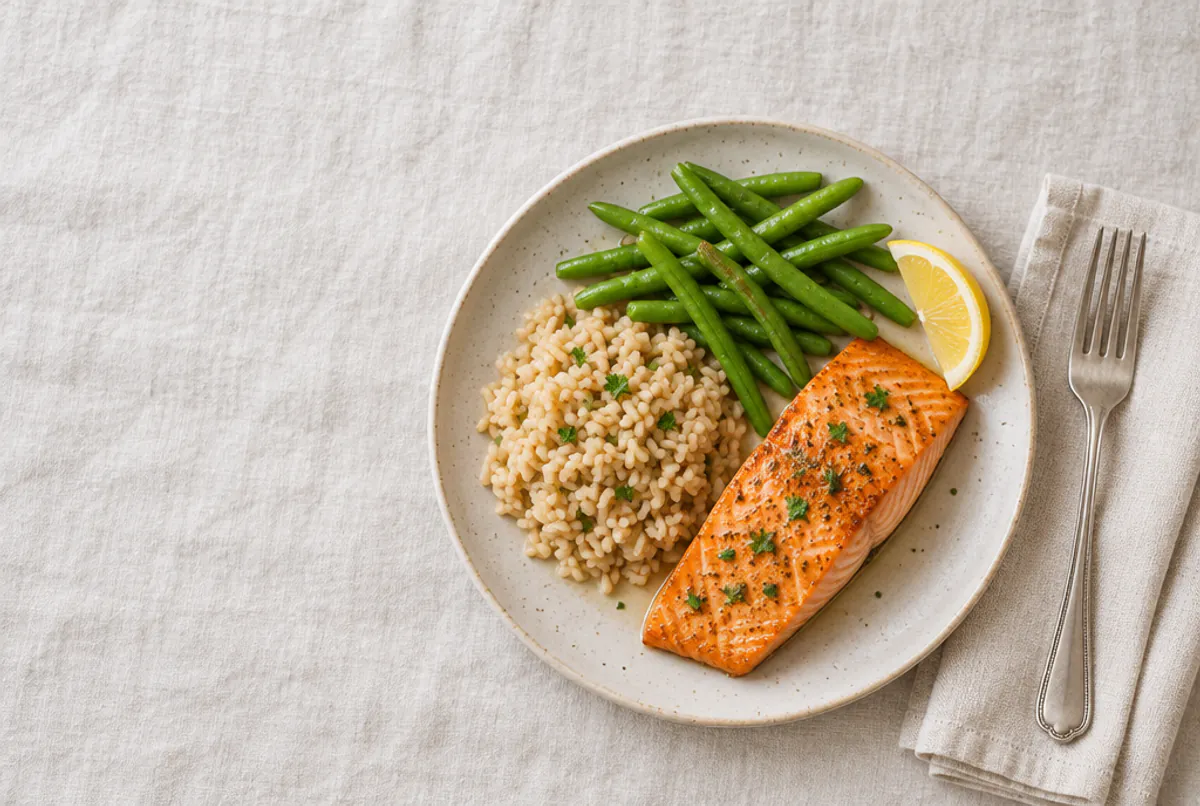
The seven days at a glance
| Day | Calories | Protein (g) | Carbs (g) | Fat (g) | Fiber (g) |
|---|---|---|---|---|---|
| Day 1 | 1,518 | 76 | 203 | 48 | 39 |
| Day 2 | 1,488 | 121 | 145 | 47 | 25 |
| Day 3 | 1,509 | 109 | 142 | 63 | 28 |
| Day 4 | 1,495 | 73 | 208 | 48 | 37 |
| Day 5 | 1,500 | 67 | 244 | 34 | 52 |
| Day 6 | 1,510 | 99 | 162 | 54 | 28 |
| Day 7 | 1,492 | 100 | 186 | 43 | 37 |
| Average | 1,502 | 92 | 184 | 48 | 35 |
Estimates based on USDA FoodData Central, worked out by our recipe engine each time the site is built (how we calculate). Each day is about 1,500 calories. Sodium excludes any salt you add. Amounts are cooked weights unless a food is described as dry.
Day 1: about 1,500 calories
Breakfast: Oatmeal with milk and blueberries (401 calories)
- Rolled oats (dry): 50 g
- 1% milk: 230 g
- Blueberries: 70 g
- Almonds: 13 g
Lunch: Lentil and spinach bowl (454 calories)
- Lentils (cooked): 190 g
- Spinach: 55 g
- Tomato: 85 g
- Olive oil: 10 g
- Brown rice (cooked): 95 g
Dinner: Salmon with brown rice and broccoli (466 calories)
- Salmon (cooked): 115 g
- Brown rice (cooked): 145 g
- Broccoli (boiled): 145 g
Snack: Apple with peanut butter (197 calories)
- Apple: 170 g
- Peanut butter: 15 g
Day 2: about 1,500 calories
Breakfast: Eggs on whole-wheat toast with an orange (385 calories)
- Hard-boiled egg: 100 g
- Whole-wheat bread: 65 g
- Orange: 140 g
Lunch: Tuna sandwich with salad (415 calories)
- Tuna, canned in water: 140 g
- Whole-wheat bread: 65 g
- Romaine lettuce: 40 g
- Tomato: 90 g
- Mayonnaise: 15 g
Dinner: Chicken with sweet potato and carrots (532 calories)
- Roast chicken breast: 130 g
- Baked sweet potato: 200 g
- Carrots: 120 g
- Olive oil: 10 g
Snack: Yogurt with strawberries (156 calories)
- Greek yogurt, low-fat: 170 g
- Strawberries: 100 g
Day 3: about 1,500 calories
Breakfast: Greek yogurt with strawberries and almonds (284 calories)
- Greek yogurt, low-fat: 180 g
- Strawberries: 90 g
- Almonds: 13 g
- Banana: 55 g
Lunch: Chicken and quinoa with vegetables (518 calories)
- Roast chicken breast: 120 g
- Quinoa (cooked): 170 g
- Cucumber: 90 g
- Red pepper: 90 g
- Olive oil: 9 g
Dinner: Tofu stir-fry with rice and broccoli (530 calories)
- Firm tofu: 165 g
- Brown rice (cooked): 135 g
- Broccoli (boiled): 135 g
- Olive oil: 9 g
Snack: Hummus with carrots (175 calories)
- Hummus: 55 g
- Carrots: 110 g
Day 4: about 1,500 calories
Breakfast: Peanut butter banana toast with milk (353 calories)
- Whole-wheat bread: 50 g
- Peanut butter: 12 g
- Banana: 90 g
- 1% milk: 180 g
Lunch: Chickpea and hummus wrap (524 calories)
- Flour tortilla: 55 g
- Chickpeas (cooked): 120 g
- Hummus: 45 g
- Carrots: 90 g
- Romaine lettuce: 30 g
Dinner: Beef pasta with spinach and tomato (419 calories)
- Lean ground beef (cooked): 75 g
- Whole-wheat pasta (cooked): 150 g
- Spinach: 45 g
- Tomato: 70 g
Snack: Almonds and a pear (199 calories)
- Almonds: 21 g
- Pear: 135 g
Day 5: about 1,500 calories
Breakfast: Cottage cheese with pear and toast (294 calories)
- Cottage cheese, 2%: 120 g
- Pear: 190 g
- Whole-wheat bread: 35 g
Lunch: Black bean rice bowl (466 calories)
- Black beans (cooked): 135 g
- Brown rice (cooked): 155 g
- Avocado: 50 g
- Tomato: 95 g
Dinner: Baked potato with black beans and broccoli (519 calories)
- Baked potato: 180 g
- Black beans (cooked): 135 g
- Broccoli (boiled): 155 g
- Cheddar: 29 g
Snack: Apple with peanut butter (221 calories)
- Apple: 190 g
- Peanut butter: 17 g
Day 6: about 1,500 calories
Breakfast: Oatmeal with milk and blueberries (376 calories)
- Rolled oats (dry): 45 g
- 1% milk: 215 g
- Blueberries: 70 g
- Almonds: 13 g
Lunch: Chicken and quinoa with vegetables (518 calories)
- Roast chicken breast: 120 g
- Quinoa (cooked): 170 g
- Cucumber: 90 g
- Red pepper: 90 g
- Olive oil: 9 g
Dinner: Salmon with brown rice and broccoli (440 calories)
- Salmon (cooked): 110 g
- Brown rice (cooked): 135 g
- Broccoli (boiled): 135 g
Snack: Hummus with carrots (175 calories)
- Hummus: 55 g
- Carrots: 110 g
Day 7: about 1,500 calories
Breakfast: Eggs on whole-wheat toast with an orange (362 calories)
- Hard-boiled egg: 95 g
- Whole-wheat bread: 60 g
- Orange: 135 g
Lunch: Lentil and spinach bowl (454 calories)
- Lentils (cooked): 190 g
- Spinach: 55 g
- Tomato: 85 g
- Olive oil: 10 g
- Brown rice (cooked): 95 g
Dinner: Beef pasta with spinach and tomato (530 calories)
- Lean ground beef (cooked): 95 g
- Whole-wheat pasta (cooked): 190 g
- Spinach: 55 g
- Tomato: 85 g
Snack: Yogurt with strawberries (147 calories)
- Greek yogurt, low-fat: 160 g
- Strawberries: 95 g
How the plan was built
Each day uses ordinary foods (oats, eggs, yogurt, beans, fish, chicken, tofu, vegetables, fruit) and the portions are set so the day’s calories, as worked out from USDA data, land close to 1,500. Swap foods for similar ones, and see the meal plan generator to build a day at another calorie level.
Using it safely
Talk to a clinician or dietitian before following a calorie-reduced plan, especially if you take medicines or have a medical condition. If you feel unwell, hungry all the time or low in energy, speak to your clinician. For other levels, see the 1,800 calorie plan and the 2,000 calorie plan.
TDEE Calculator: Find your own estimated calorie needs before choosing a plan.
Questions people ask
Is 1,500 calories right for me?
It depends on your size, age and activity. The TDEE calculator estimates your needs; the calorie deficit calculator shows a moderate target for adults with a BMI of 25 or more.
Will I lose weight on this?
We make no promise. Weight change depends on many things; see not losing weight in a calorie deficit.