Calories in Homemade Bread
Homemade bread is mostly flour, so the calories in a slice depend on how much flour the loaf uses and how many slices you cut. A basic yeast loaf is loaded below. Change any line and the label updates.
The recipe used here
This is basic yeast bread, a basic version: change the ingredients to match yours. It makes 12 servings and one serving is one slice. With the USDA foods matched below the label rounds it to 140 calories per slice. This is an estimate.
- 3 cups all-purpose flour
- 1 cup warm water
- 2 tsp active dry yeast
- 1 tbsp sugar
- 1 1/2 tsp salt
- 2 tbsp olive oil
Recipe nutrition calculator
This tool runs entirely in your browser. Nothing you enter is sent to us or anyone else.
- Range
- Food composition varies between brands, crops and cooking. Treat these numbers as an estimate, not an exact value.
- Based on
- Estimate based on USDA FoodData Central. How we calculate
- Cannot tell you
- Exact values for your brands or cooking method. This is for personal use and is not a regulatory label check.
Ingredients and matches
Check each match. Change any that are wrong: the totals update straight away. Lines marked "Not counted" are left out until you fix them.
| Your line | USDA match | Grams | Calories | Protein | Fat | Carbs |
|---|
Per serving and whole recipe
| Nutrient | Per serving | Whole recipe |
|---|
Unrounded values. The Nutrition Facts panel uses the FDA rounding rules.
Nutrition Facts
How this is calculated
- Each ingredient line is split into amount, unit and food, matched to a USDA FoodData Central entry, and turned into grams (cups and spoons use USDA's weight for that food).
- Nutrients are added up for the whole recipe and divided by the number of servings you enter.
- The Nutrition Facts panel follows the layout and rounding rules in 21 CFR 101.9. It is an estimate for your own use.
Every number this tool uses is listed in our sources ledger:
- unit.volume.label: U.S. Food and Drug Administration (21 CFR 101.9, eCFR), 21 CFR 101.9 Nutrition labeling of food (current as of 2026-11-20)
- unit.lb_g: Federal Trade Commission (16 CFR 500.19, eCFR), 16 CFR 500.19 Conversion of SI metric quantities to inch/pound quantities
- fda.dv.fat: U.S. Food and Drug Administration (21 CFR 101.9, eCFR), 21 CFR 101.9 Nutrition labeling of food (current as of 2026-11-20)
- fda.dv.sodium: U.S. Food and Drug Administration (21 CFR 101.9, eCFR), 21 CFR 101.9 Nutrition labeling of food (current as of 2026-11-20)
- fda.rounding: U.S. Food and Drug Administration (21 CFR 101.9, eCFR), 21 CFR 101.9 Nutrition labeling of food (current as of 2026-11-20)
- usda.fdc: USDA Agricultural Research Service, FoodData Central download datasets (SR Legacy CSV; Foundation Foods JSON)
Where the calories come from
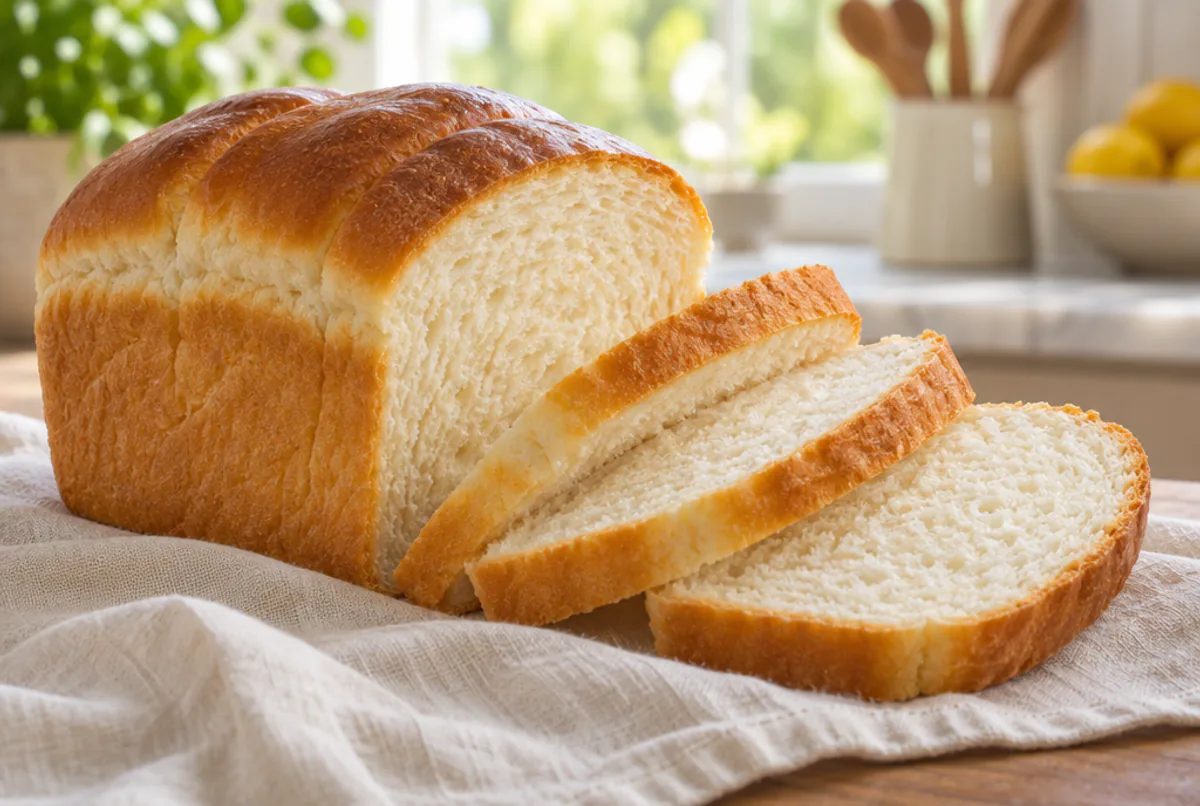
Flour supplies most of the calories in a plain loaf. Water, yeast and salt add almost none, and the olive oil and sugar add a little. That makes the calories in one slice easy to move in three ways: use less flour per loaf, cut more slices, or leave out the oil.
What changes the number
- Slice size. The recipe is cut into 12 slices. If you cut 16 thinner slices, change the Servings box and every number per slice drops.
- Type of flour. To use whole wheat flour, change the flour line to “3 cups whole wheat flour” and check the USDA match the calculator picks.
- Enrichments. Milk in place of water, butter, honey, eggs, seeds or cheese in the dough all add calories. Add a line for each one.
- Toppings. Butter or oil brushed on top counts too. Add it as its own line.
Weigh the flour if you can
A cup of flour changes with how it is scooped, and flour is most of this recipe. Weighing it in grams gives a steadier answer than cups. If you only have cup amounts, the cups to grams converter shows the weight USDA lists for each food.
Using this for your own loaf
Replace each line with what you actually use, then set Servings to the number of slices you get. For a step-by-step method that works for any dish, see how to calculate calories in homemade food. Banana bread has its own page: calories in homemade banana bread.
Questions people ask
Do the calories change when the bread bakes?
Not in any way that matters. Baking drives off water, which weighs something but has no calories, so the loaf weighs less while the calories stay about the same. This is why the calculator works from the raw ingredients.
How do I get calories per 100 grams of bread?
Weigh the baked loaf, then divide the loaf's total calories by its weight in grams and multiply by 100. The calculator gives you the total for the whole loaf in the table of unrounded numbers.
Related tools and guides
Recipe Nutrition Calculator
Paste an ingredient list and get calories, macros and a Nutrition Facts panel per serving.
Recipe Scaler
Scale an ingredient list up or down by servings or by a factor.
Cups to Grams Converter
Ingredient-specific cups, spoons and grams from USDA portion data.
Calories in Homemade Banana Bread
Calories per slice of a basic homemade banana bread, with the label ready to edit.
How to Calculate Calories in Homemade Food
The weigh, total and divide method with a worked example.
Sources
- U.S. Department of Agriculture, Agricultural Research Service. FoodData Central: SR Legacy (April 2018) and Foundation Foods (October 2026) datasets. Accessed 2026-11-24.
- U.S. Food and Drug Administration. 21 CFR 101.9 Nutrition labeling of food (eCFR, current as of November 2026). Accessed 2026-11-24.