Calories in Homemade Chicken Soup
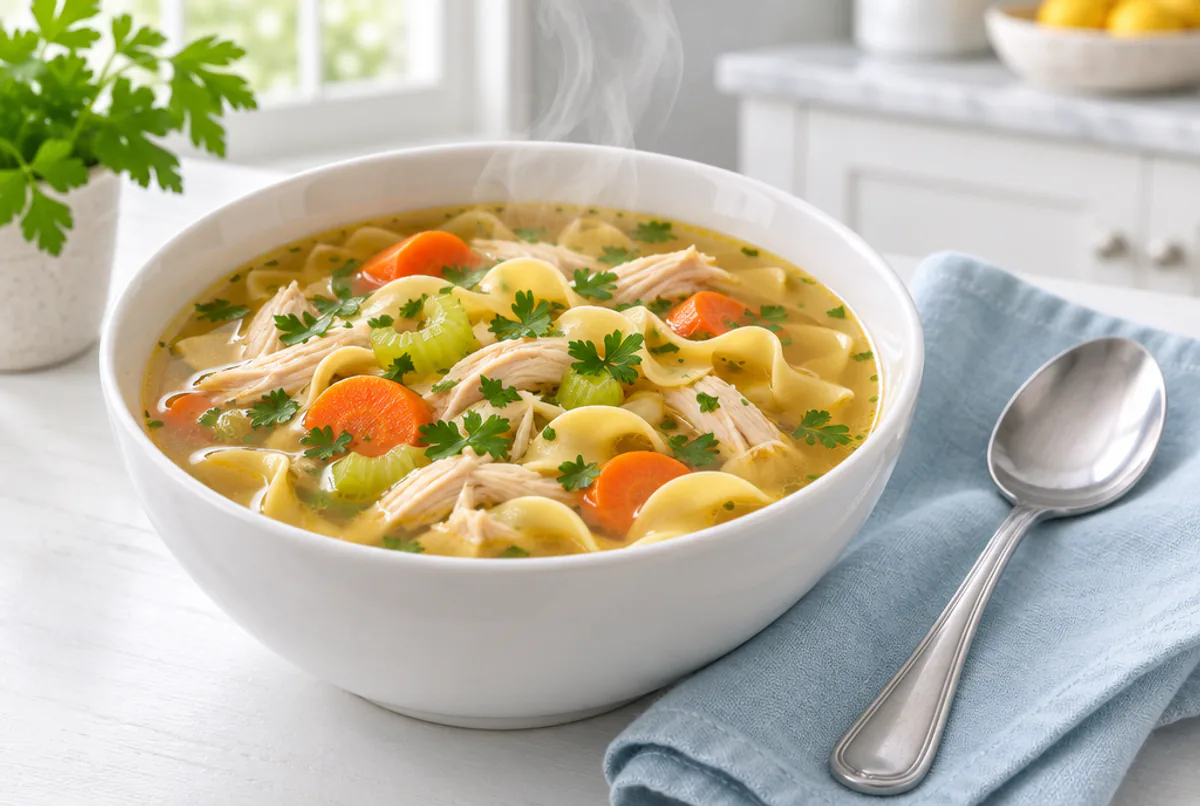
In chicken soup the calories come mainly from the chicken, the noodles and any oil, while the broth adds little but a lot of sodium. A basic pot is loaded below. Change any line and the label updates.
The recipe used here
This is basic chicken noodle soup, a basic version: change the ingredients to match yours. It makes 6 servings and one serving is one bowl. With the USDA foods matched below the label rounds it to 220 calories per bowl. This is an estimate.
- 1 lb boneless skinless chicken breast
- 2 medium carrots
- 2 stalks celery
- 1 medium yellow onion
- 8 cups chicken broth
- 4 oz dry egg noodles
- 1 tbsp olive oil
Recipe nutrition calculator
This tool runs entirely in your browser. Nothing you enter is sent to us or anyone else.
- Range
- Food composition varies between brands, crops and cooking. Treat these numbers as an estimate, not an exact value.
- Based on
- Estimate based on USDA FoodData Central. How we calculate
- Cannot tell you
- Exact values for your brands or cooking method. This is for personal use and is not a regulatory label check.
Ingredients and matches
Check each match. Change any that are wrong: the totals update straight away. Lines marked "Not counted" are left out until you fix them.
| Your line | USDA match | Grams | Calories | Protein | Fat | Carbs |
|---|
Per serving and whole recipe
| Nutrient | Per serving | Whole recipe |
|---|
Unrounded values. The Nutrition Facts panel uses the FDA rounding rules.
Nutrition Facts
How this is calculated
- Each ingredient line is split into amount, unit and food, matched to a USDA FoodData Central entry, and turned into grams (cups and spoons use USDA's weight for that food).
- Nutrients are added up for the whole recipe and divided by the number of servings you enter.
- The Nutrition Facts panel follows the layout and rounding rules in 21 CFR 101.9. It is an estimate for your own use.
Every number this tool uses is listed in our sources ledger:
- unit.volume.label: U.S. Food and Drug Administration (21 CFR 101.9, eCFR), 21 CFR 101.9 Nutrition labeling of food (current as of 2026-11-20)
- unit.lb_g: Federal Trade Commission (16 CFR 500.19, eCFR), 16 CFR 500.19 Conversion of SI metric quantities to inch/pound quantities
- fda.dv.fat: U.S. Food and Drug Administration (21 CFR 101.9, eCFR), 21 CFR 101.9 Nutrition labeling of food (current as of 2026-11-20)
- fda.dv.sodium: U.S. Food and Drug Administration (21 CFR 101.9, eCFR), 21 CFR 101.9 Nutrition labeling of food (current as of 2026-11-20)
- fda.rounding: U.S. Food and Drug Administration (21 CFR 101.9, eCFR), 21 CFR 101.9 Nutrition labeling of food (current as of 2026-11-20)
- usda.fdc: USDA Agricultural Research Service, FoodData Central download datasets (SR Legacy CSV; Foundation Foods JSON)
Where the calories come from
The chicken breast, the egg noodles and the olive oil supply most of the calories in this pot. The carrots, celery and onion add very little. The broth contributes some calories and a good deal of sodium, which is why the sodium on the label is worth a look.
Count a bowl, not the pot
The recipe makes 6 servings, so one serving is one sixth of the pot. A large bowl may be more than that. If you measure how much soup you actually eat, set Servings to the number of those portions the pot gives.
Raw and dry weights
The chicken is entered raw and the noodles dry, because the pot is cooked from those. See raw vs cooked weight for why this matters and how to switch.
Common changes
- Rice or extra vegetables instead of noodles. Replace the noodle line.
- Chicken thigh in place of breast. Change the chicken line and pick the matching USDA entry. Thigh usually has more fat.
- Lower-sodium broth. Change the broth line and the USDA match. For daily limits, see the sodium page.
Your own recipe
Paste your ingredients into the recipe nutrition calculator if you want to start from a blank page. A similar one-pot dish is homemade chili.
Questions people ask
Should I weigh the chicken raw or cooked?
Weigh it the way the USDA entry describes it. This recipe uses raw chicken breast, so weigh it before cooking. If you weigh it cooked, pick a cooked chicken entry instead.
How do I lower the sodium?
Change the broth line to a lower-sodium broth and pick the matching USDA entry. The label updates with the new sodium amount.
Related tools and guides
Recipe Nutrition Calculator
Paste an ingredient list and get calories, macros and a Nutrition Facts panel per serving.
Raw vs Cooked Weight
Why weights change with cooking and how to log consistently.
Calories in Homemade Chili
Calories per bowl of a basic homemade beef chili, with the label ready to edit.
Sodium Intake Calculator
Add up the day's sodium against the published limit.
Meal Calorie Calculator
Add the foods on your plate and see the meal total.
Sources
- U.S. Department of Agriculture, Agricultural Research Service. FoodData Central: SR Legacy (April 2018) and Foundation Foods (October 2026) datasets. Accessed 2026-11-24.
- U.S. Food and Drug Administration. 21 CFR 101.9 Nutrition labeling of food (eCFR, current as of November 2026). Accessed 2026-11-24.