Calories in Homemade Chili
The calories in chili come mostly from the ground beef, the beans and the oil, and the fat in the beef matters most. A basic pot is loaded below. Change any line and the label updates.
The recipe used here
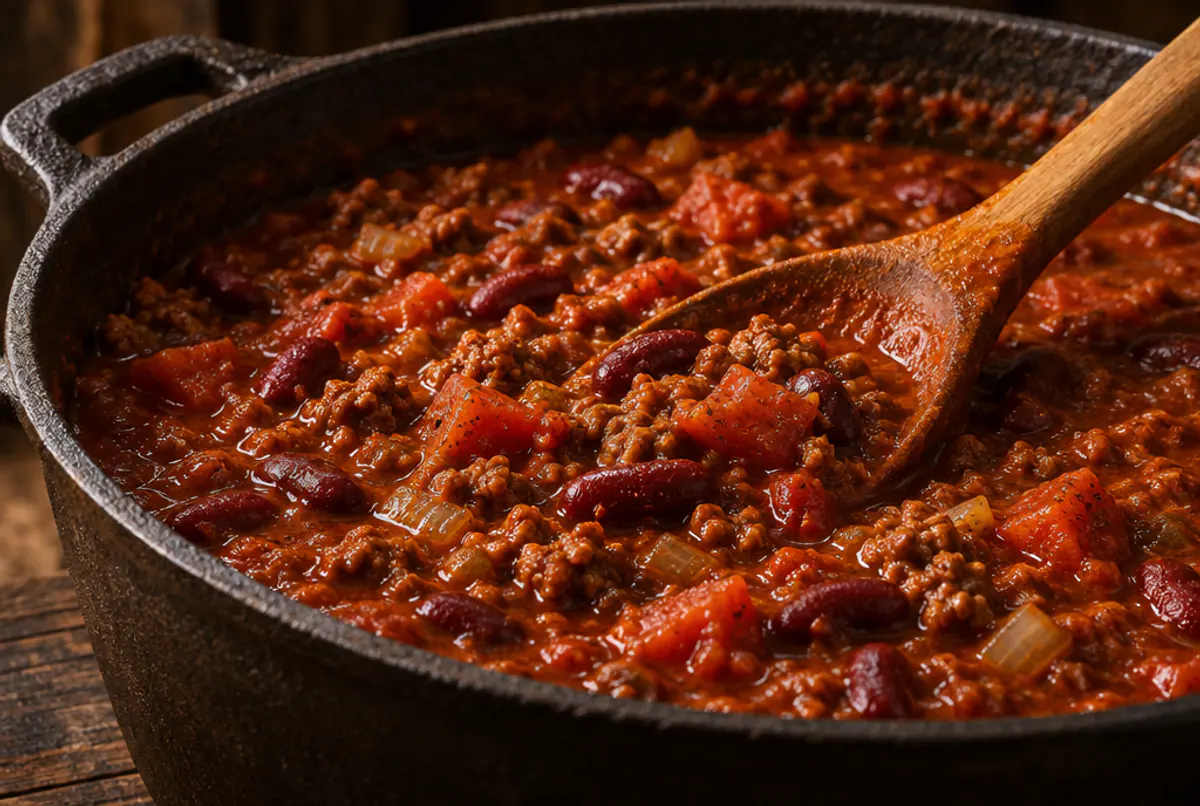
This is basic beef chili, a basic version: change the ingredients to match yours. It makes 6 servings and one serving is one bowl. With the USDA foods matched below the label rounds it to 270 calories per bowl. This is an estimate.
- 1 lb ground beef
- 15 oz canned kidney beans
- 14.5 oz canned diced tomatoes
- 1 medium yellow onion
- 1 tbsp chili powder
- 1 tsp ground cumin
- 1 tbsp olive oil
Recipe nutrition calculator
This tool runs entirely in your browser. Nothing you enter is sent to us or anyone else.
- Range
- Food composition varies between brands, crops and cooking. Treat these numbers as an estimate, not an exact value.
- Based on
- Estimate based on USDA FoodData Central. How we calculate
- Cannot tell you
- Exact values for your brands or cooking method. This is for personal use and is not a regulatory label check.
Ingredients and matches
Check each match. Change any that are wrong: the totals update straight away. Lines marked "Not counted" are left out until you fix them.
| Your line | USDA match | Grams | Calories | Protein | Fat | Carbs |
|---|
Per serving and whole recipe
| Nutrient | Per serving | Whole recipe |
|---|
Unrounded values. The Nutrition Facts panel uses the FDA rounding rules.
Nutrition Facts
How this is calculated
- Each ingredient line is split into amount, unit and food, matched to a USDA FoodData Central entry, and turned into grams (cups and spoons use USDA's weight for that food).
- Nutrients are added up for the whole recipe and divided by the number of servings you enter.
- The Nutrition Facts panel follows the layout and rounding rules in 21 CFR 101.9. It is an estimate for your own use.
Every number this tool uses is listed in our sources ledger:
- unit.volume.label: U.S. Food and Drug Administration (21 CFR 101.9, eCFR), 21 CFR 101.9 Nutrition labeling of food (current as of 2026-11-20)
- unit.lb_g: Federal Trade Commission (16 CFR 500.19, eCFR), 16 CFR 500.19 Conversion of SI metric quantities to inch/pound quantities
- fda.dv.fat: U.S. Food and Drug Administration (21 CFR 101.9, eCFR), 21 CFR 101.9 Nutrition labeling of food (current as of 2026-11-20)
- fda.dv.sodium: U.S. Food and Drug Administration (21 CFR 101.9, eCFR), 21 CFR 101.9 Nutrition labeling of food (current as of 2026-11-20)
- fda.rounding: U.S. Food and Drug Administration (21 CFR 101.9, eCFR), 21 CFR 101.9 Nutrition labeling of food (current as of 2026-11-20)
- usda.fdc: USDA Agricultural Research Service, FoodData Central download datasets (SR Legacy CSV; Foundation Foods JSON)
Where the calories come from
Most of the calories in this chili come from the ground beef, which brings both protein and fat. The kidney beans add carbohydrate, fibre and some protein, and the olive oil adds fat. Tomatoes, onion and spices add very little.
The beef changes the answer most
Ground beef is sold by lean percentage, and the fat content moves the calories a lot. The recipe uses the USDA entry for 85% lean ground beef, raw. If yours is leaner or fattier, open the match for that line and pick the USDA entry that fits the label on your pack.
Draining and toppings
The calculator counts all the fat in the raw meat. If you drain it after browning, the real calories are a little lower. Toppings are not included, so add them as lines: shredded cheese, sour cream, rice, chips or avocado.
Beans and tomatoes
The recipe lists the weight of the cans, which is easy to read from the label. If you rinse and drain the beans, the real figure changes slightly. Keep the line as it is for a simple estimate, or switch to a drained entry.
Bowl size
The recipe makes 6 servings. Set Servings to however many bowls your pot gives. For how close to expect the numbers to be, see how accurate recipe nutrition calculators are. For a similar pot, see homemade chicken soup, or homemade lasagna.
Questions people ask
Does draining the fat change the calories?
Yes. The calculator counts all the fat in the raw meat. If you pour off fat after browning, some of it leaves the pot, so the real number is a little lower.
How do I make it with ground turkey?
Change the first line to ground turkey and check the USDA match. The calculator shows the new calories and fat straight away.
Related tools and guides
Recipe Nutrition Calculator
Paste an ingredient list and get calories, macros and a Nutrition Facts panel per serving.
Calories in Homemade Chicken Soup
Calories per bowl of a basic homemade chicken noodle soup, with the label ready to edit.
Calories in Homemade Lasagna
Calories per piece of a basic homemade meat lasagna, with the label ready to edit.
Raw vs Cooked Weight
Why weights change with cooking and how to log consistently.
Protein Intake Calculator
Daily protein range from your body weight.
Sources
- U.S. Department of Agriculture, Agricultural Research Service. FoodData Central: SR Legacy (April 2018) and Foundation Foods (October 2026) datasets. Accessed 2026-11-24.
- U.S. Food and Drug Administration. 21 CFR 101.9 Nutrition labeling of food (eCFR, current as of November 2026). Accessed 2026-11-24.