Calories in Homemade Pizza
A slice of homemade pizza depends mainly on the crust and the cheese, and on how many slices you cut. A basic cheese pizza is loaded below. Add toppings or change any line and the label updates.
The recipe used here
This is basic cheese pizza, a basic version: change the ingredients to match yours. It makes 8 servings and one serving is one slice. With the USDA foods matched below the label rounds it to 180 calories per slice. This is an estimate.
- 2 cups all-purpose flour
- 3/4 cup warm water
- 1 tsp active dry yeast
- 1 tbsp olive oil
- 1/2 tsp salt
- 120 g tomato sauce
- 1 cup shredded mozzarella cheese
Recipe nutrition calculator
This tool runs entirely in your browser. Nothing you enter is sent to us or anyone else.
- Range
- Food composition varies between brands, crops and cooking. Treat these numbers as an estimate, not an exact value.
- Based on
- Estimate based on USDA FoodData Central. How we calculate
- Cannot tell you
- Exact values for your brands or cooking method. This is for personal use and is not a regulatory label check.
Ingredients and matches
Check each match. Change any that are wrong: the totals update straight away. Lines marked "Not counted" are left out until you fix them.
| Your line | USDA match | Grams | Calories | Protein | Fat | Carbs |
|---|
Per serving and whole recipe
| Nutrient | Per serving | Whole recipe |
|---|
Unrounded values. The Nutrition Facts panel uses the FDA rounding rules.
Nutrition Facts
How this is calculated
- Each ingredient line is split into amount, unit and food, matched to a USDA FoodData Central entry, and turned into grams (cups and spoons use USDA's weight for that food).
- Nutrients are added up for the whole recipe and divided by the number of servings you enter.
- The Nutrition Facts panel follows the layout and rounding rules in 21 CFR 101.9. It is an estimate for your own use.
Every number this tool uses is listed in our sources ledger:
- unit.volume.label: U.S. Food and Drug Administration (21 CFR 101.9, eCFR), 21 CFR 101.9 Nutrition labeling of food (current as of 2026-11-20)
- unit.lb_g: Federal Trade Commission (16 CFR 500.19, eCFR), 16 CFR 500.19 Conversion of SI metric quantities to inch/pound quantities
- fda.dv.fat: U.S. Food and Drug Administration (21 CFR 101.9, eCFR), 21 CFR 101.9 Nutrition labeling of food (current as of 2026-11-20)
- fda.dv.sodium: U.S. Food and Drug Administration (21 CFR 101.9, eCFR), 21 CFR 101.9 Nutrition labeling of food (current as of 2026-11-20)
- fda.rounding: U.S. Food and Drug Administration (21 CFR 101.9, eCFR), 21 CFR 101.9 Nutrition labeling of food (current as of 2026-11-20)
- usda.fdc: USDA Agricultural Research Service, FoodData Central download datasets (SR Legacy CSV; Foundation Foods JSON)
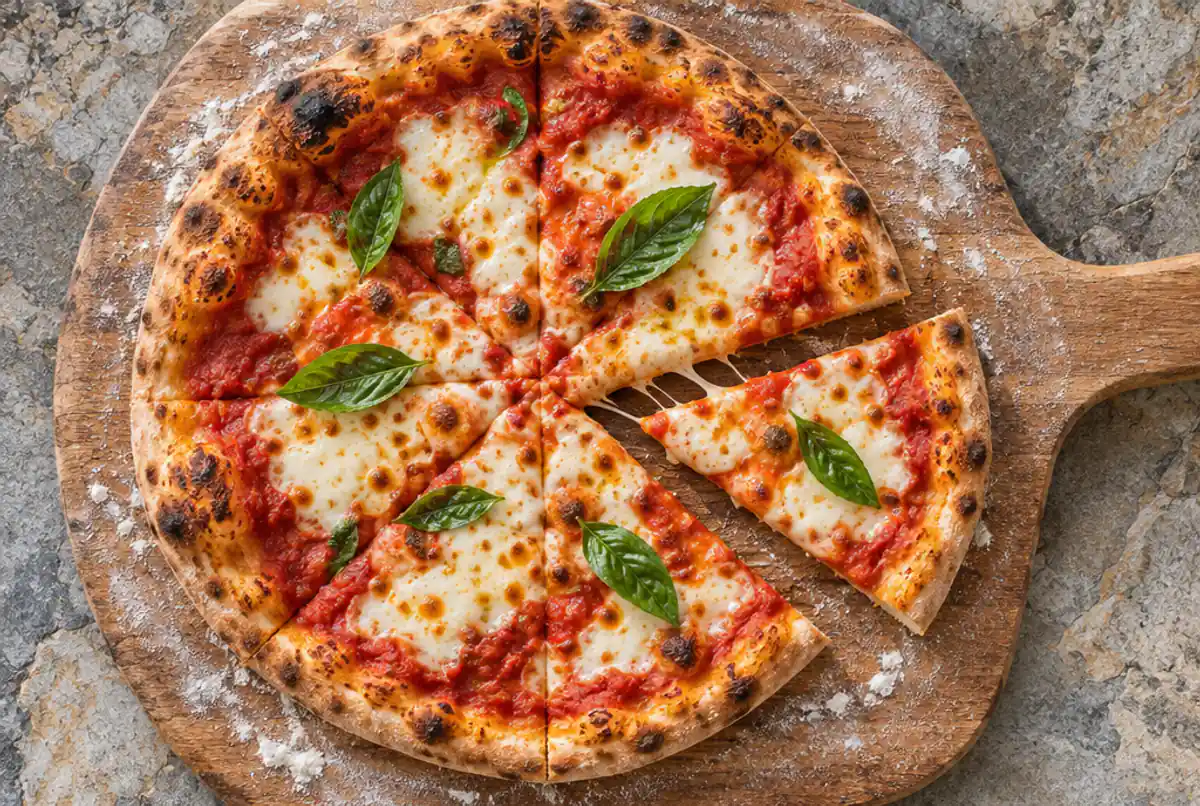
Where the calories come from
The dough and the cheese carry most of the calories in a basic cheese pizza. The tomato sauce adds a little. The crust is mostly flour, so a thick crust or a larger pizza uses more flour and raises the calories in every slice.
Adding toppings
Toppings are where homemade pizzas differ most. Add one line for each, using a weight where you can:
- Cured and processed meats such as pepperoni or sausage add fat and sodium. Check the sodium line on the label.
- Vegetables add very little. They are worth adding for the record, but they will barely move the total.
- Extra cheese or a drizzle of oil adds calories quickly. Add them as separate lines.
Sauce and cheese by weight
The recipe lists the sauce in grams and the cheese in cups. If you use a different amount, change the line. Shredded cheese packs differently from person to person, so weighing it gives a steadier answer.
Slices
The recipe is cut into 8 slices. If you cut 6 or 12, change the Servings box.
Which pizza page to use
This page starts from a stated homemade recipe. If you want to build a pizza from crust, sauce and toppings by size and slice count, use the pizza calorie calculator. To label any recipe of your own, use the recipe nutrition calculator.
Questions people ask
How do I add toppings?
Add one line per topping with a weight, for example 60 g pepperoni or 80 g mushrooms. Check the USDA match for each, and set the Servings box to the number of slices.
Does thicker crust mean more calories?
Yes, if it uses more dough. More flour per pizza means more calories per slice unless you also cut more slices.
Related tools and guides
Recipe Nutrition Calculator
Paste an ingredient list and get calories, macros and a Nutrition Facts panel per serving.
Pizza Calorie Calculator
Crust, size, slices and toppings to calories per slice.
Calories in Homemade Bread
Calories per slice of a basic homemade yeast bread, with the label ready to edit.
How to Calculate Calories in Homemade Food
The weigh, total and divide method with a worked example.
Raw vs Cooked Weight
Why weights change with cooking and how to log consistently.
Sources
- U.S. Department of Agriculture, Agricultural Research Service. FoodData Central: SR Legacy (April 2018) and Foundation Foods (October 2026) datasets. Accessed 2026-11-24.
- U.S. Food and Drug Administration. 21 CFR 101.9 Nutrition labeling of food (eCFR, current as of November 2026). Accessed 2026-11-24.