

Calculate your daily calorie needs and nutritional requirements during pregnancy
Enter your information and click "Calculate Calorie Needs"
Crucial for preventing neural tube defects in baby's brain and spine
Sources: Leafy greens, citrus fruits, beans, fortified cereals
Builds baby's bones and teeth; protects mother's bone density
Sources: Dairy products, fortified plant milk, leafy greens
Supports increased blood volume; prevents anemia
Sources: Lean meat, spinach, legumes, fortified grains
Essential for baby's brain and eye development
Sources: Fatty fish, walnuts, flaxseeds, chia seeds
Calculate your calorie needs first to see personalized meal suggestions
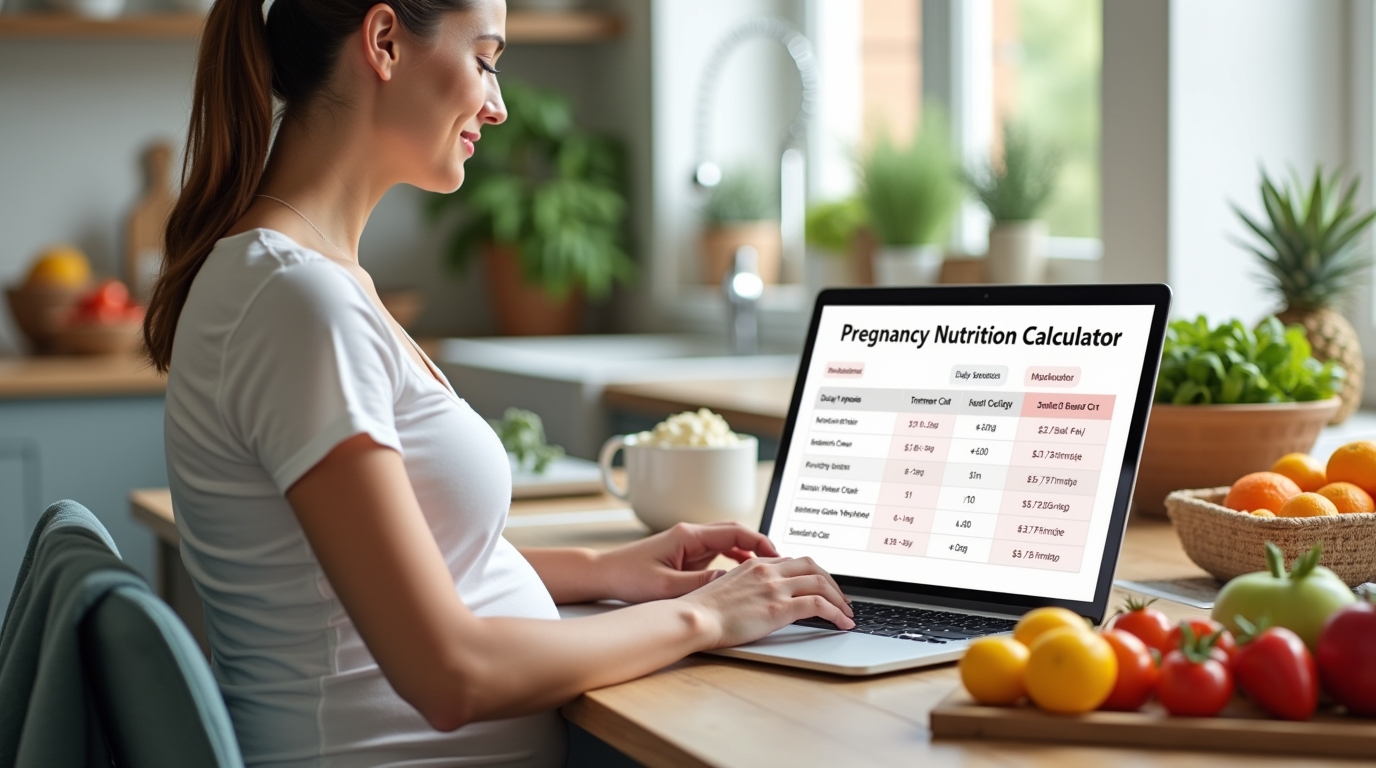
Pregnancy triggers profound hormonal shifts that directly influence appetite regulation, metabolism, and nutrient absorption. Estrogen, progesterone, human chorionic gonadotropin (hCG), and placental lactogen all play key roles in modifying how a woman’s body processes calories and nutrients. A pregnancy nutrition calculator becomes especially valuable during these shifts because subjective hunger cues often become unreliable.
In early pregnancy, elevated hCG levels are associated with nausea and vomiting, commonly referred to as hyperemesis gravidarum in severe cases. Many women unintentionally reduce caloric intake during this phase, which can compromise micronutrient stores. The pregnancy nutrition calculator helps compensate by emphasizing nutrient-dense caloric targets rather than volume-based eating.
Progesterone slows gastrointestinal motility, increasing the risk of constipation and bloating. This hormonal effect requires dietary fiber optimization rather than caloric restriction. The calculator’s macronutrient breakdown encourages complex carbohydrates and healthy fats, supporting digestive health while maintaining caloric adequacy.
Later in pregnancy, placental lactogen induces insulin resistance to prioritize glucose availability for the fetus. This physiological change explains why understanding how many calories should a pregnant woman eat is not just about quantity, but also timing and composition. Balanced meals distributed across the day, as shown in the calculator’s meal planner, help stabilize postprandial glucose levels and reduce gestational diabetes risk.
Gestational diabetes mellitus (GDM) affects a significant percentage of pregnant women worldwide. It is characterized by impaired glucose tolerance that first appears during pregnancy. While caloric restriction is not recommended, inaccurate caloric intake can worsen glycemic control.
A pregnancy nutrition calculator provides a controlled caloric framework that supports metabolic stability without inducing ketosis. Women often ask how many calories should a pregnant woman eat after a gestational diabetes diagnosis. The answer depends on individualized metabolic needs rather than arbitrary diet plans.
This calculator supports moderate carbohydrate distribution and prioritizes protein and unsaturated fats. This approach aligns with medical nutrition therapy protocols used in obstetric endocrinology. The meal planner reduces glucose spikes by spreading caloric intake evenly throughout the day, which is essential for women managing insulin sensitivity changes.
Iron-deficiency anemia is one of the most common nutritional complications in pregnant women. Plasma volume expansion increases iron requirements significantly, particularly in the second and third trimesters. A pregnancy nutrition calculator indirectly supports anemia prevention by ensuring adequate caloric intake, which facilitates iron absorption.
Low caloric intake often correlates with reduced dietary iron and vitamin C intake. By identifying appropriate calorie targets, the calculator encourages women to include iron-rich foods such as lean meats, legumes, and fortified grains. This is particularly important for women following plant-based diets.
Women frequently underestimate their needs when asking how many calories should a pregnant woman eat while experiencing fatigue or dizziness. The calculator’s weight-gain monitoring feature can highlight insufficient intake early, allowing dietary intervention before anemia becomes clinically significant.
During pregnancy, fetal skeletal development depends heavily on maternal calcium stores. If dietary intake is inadequate, the body compensates by mobilizing calcium from maternal bones, increasing long-term osteoporosis risk.
A pregnancy nutrition calculator supports bone health by encouraging consistent caloric intake that includes calcium-rich foods. Energy restriction often leads women to eliminate dairy or fortified alternatives, unintentionally increasing fracture risk later in life.
Vitamin D plays a synergistic role by enhancing calcium absorption. Although the calculator does not replace medical testing, its nutrition guide educates women on including vitamin D-rich foods and safe sunlight exposure. This holistic approach supports both immediate pregnancy outcomes and long-term female skeletal health.

Morning sickness affects the majority of pregnant women, particularly during the first trimester. Traditional dietary advice often fails because it does not adapt to fluctuating appetite levels. A pregnancy nutrition calculator addresses this by focusing on daily totals rather than forcing large meals.
Small, frequent meals—as reflected in the tool’s meal distribution—reduce gastric irritation and stabilize blood glucose. This approach helps women meet caloric needs even when appetite is low.
Understanding how many calories should a pregnant woman eat during periods of nausea is critical. Underconsumption increases fatigue and micronutrient deficiencies, while overcompensation later in the day may worsen reflux. The calculator’s structure supports balance without pressure.
Pregnancy is associated with increased anxiety, particularly around weight gain and body changes. Many women fear eating “too much” or “too little.” A pregnancy nutrition calculator reduces this psychological burden by providing objective, medically grounded guidance.
Instead of relying on social media trends or anecdotal advice, women can trust a tool that reflects clinical standards. This reassurance supports healthier eating behaviors and reduces disordered eating patterns during pregnancy.
Knowing how many calories should a pregnant woman eat according to science—not myths—builds confidence and promotes positive maternal mental health.
nutritional transitions. Lactation significantly increases caloric requirements, often exceeding those of late pregnancy.
Women who understand caloric physiology through a pregnancy nutrition calculator are better equipped to adjust intake during breastfeeding without compromising recovery. This continuity of knowledge is particularly valuable for first-time mothers.
The effectiveness of a pregnancy nutrition calculator depends on accurate input. Women should update weight, trimester, and activity level regularly. Failure to do so can lead to misleading calorie targets.
Education around data accuracy empowers women to take ownership of their health metrics, fostering long-term nutritional literacy beyond pregnancy.

Trust is essential when women rely on digital health tools during pregnancy. A pregnancy nutrition calculator must reflect established clinical guidelines, not internet myths. This tool aligns with obstetric nutrition standards by calculating basal metabolic rate, adjusting for trimester progression, and factoring in activity level. These variables are critical for producing medically valid calorie estimates for pregnant women.
Many online tools oversimplify pregnancy nutrition by offering static calorie numbers. In contrast, a pregnancy nutrition calculator adapts dynamically as maternal weight, gestational stage, and physical activity change. This responsiveness mirrors real-world prenatal care, where nutritional recommendations evolve across pregnancy.
For women asking how many calories should a pregnant woman eat, the pregnancy nutrition calculator provides clarity grounded in physiology. It eliminates guesswork while respecting individual differences such as metabolism, lifestyle, and pre-pregnancy body composition. This is especially important for women with prior pregnancy complications, anemia, or gestational glucose intolerance.
Another advantage of a pregnancy nutrition calculator is consistency. Repeated use reinforces healthy eating patterns rather than short-term dietary fixes. Over time, women develop a stronger understanding of portion sizes, energy balance, and nutrient density. This educational benefit often extends beyond pregnancy into postpartum recovery and long-term maternal health.
Because pregnancy places unique nutritional demands on the female body, accuracy is not optional—it is essential. A well-designed pregnancy nutrition calculator empowers women to meet those demands safely, confidently, and without unnecessary dietary stress.
A pregnancy nutrition calculator is far more than a calorie counter. It is a medically informed decision-support tool designed specifically for women navigating the complex physiological demands of pregnancy. By integrating metabolic equations, trimester-based adjustments, weight monitoring, and meal planning, it answers one of the most critical maternal questions: how many calories should a pregnant woman eat to support both her health and her baby’s development.
When used correctly, this tool reduces nutritional errors, supports hormonal balance, and promotes healthy pregnancy outcomes. For female-focused health platforms, it represents an essential blend of science, empathy, and practical guidance.
NowTrack Health helps you eat smarter with easy-to-use nutrition tools. Instantly analyze calories, protein, carbs, and vitamins in any dish using our Recipe Nutrition Calculator. Track your meals, plan balanced diets, and discover science-based insights for better health and fitness — all in one place.
©2025. Now Track Health. All Rights Reserved.