Salad Calorie Calculator
Build your salad step by step to see the calories, and how much comes from the dressing.
| Item | Grams | Calories | Protein | Fat | Carbs | Fiber | Sugars |
|---|
- Range
- Brands, recipes and portion sizes vary. Treat the total as an estimate.
- Based on
- Estimate based on USDA FoodData Central, using USDA's weight for each cup, spoon or piece. How we calculate
- Cannot tell you
- The exact numbers for a café or restaurant item, which can differ a lot from home-made.
This tool runs entirely in your browser. Nothing you enter is sent to us or anyone else.
How this is calculated
- Each item is a USDA FoodData Central entry. Cups and spoons use USDA's gram weight for that food; protein is entered by cooked weight in ounces.
- Nutrients per 100 g are scaled to your amounts and added up.
Every number this tool uses is listed in our sources ledger:
- unit.volume.label: U.S. Food and Drug Administration (21 CFR 101.9, eCFR), 21 CFR 101.9 Nutrition labeling of food (current as of 2026-11-20)
- unit.lb_g: Federal Trade Commission (16 CFR 500.19, eCFR), 16 CFR 500.19 Conversion of SI metric quantities to inch/pound quantities
- usda.fdc: USDA Agricultural Research Service, FoodData Central download datasets (SR Legacy CSV; Foundation Foods JSON)
Build it the way you eat it
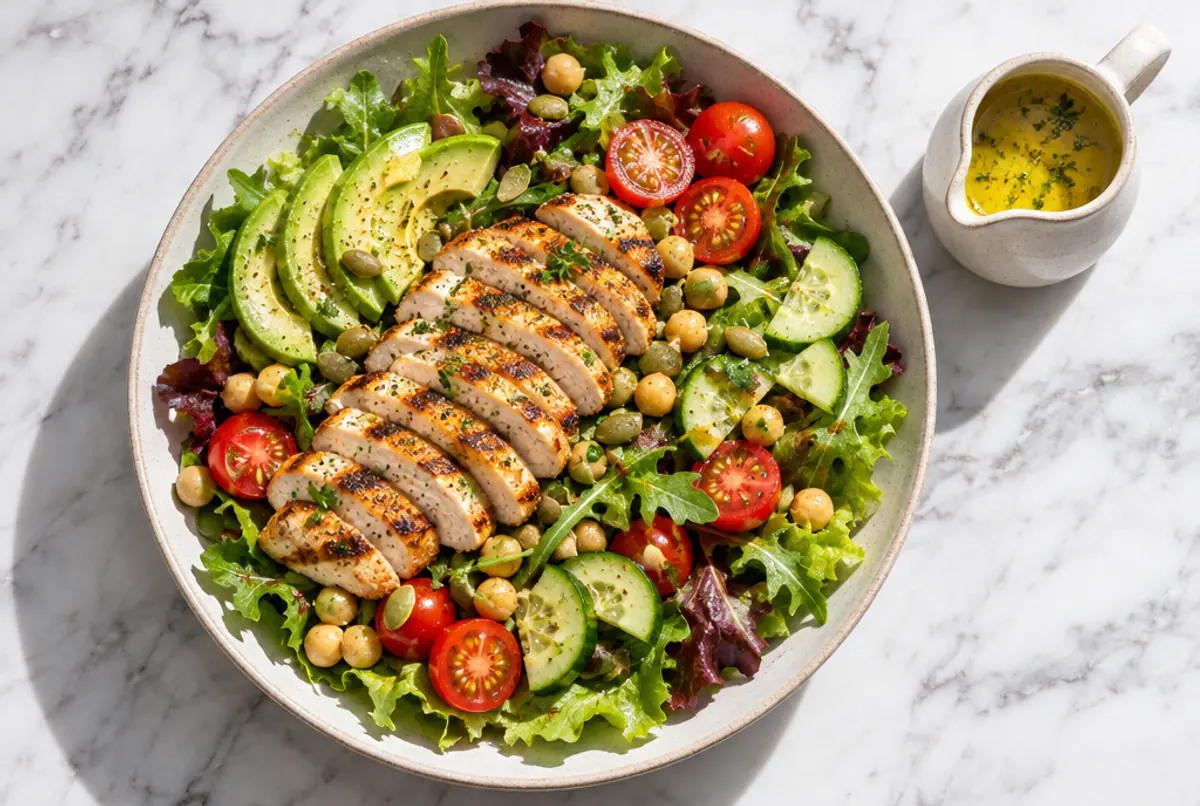
Choose greens, vegetables and toppings, a protein if you like, and one dressing. Amounts start at typical portions and can be changed. Protein is entered by cooked weight in ounces; 3 oz is roughly the size of a deck of cards.
The dressing makes the biggest difference
Greens and most vegetables add very few calories. Dressing, cheese, croutons, nuts and seeds add most of them. Compare 2 tablespoons of Italian dressing with 2 of ranch or Caesar in the builder and you will see how much the choice matters. Measuring dressing with a spoon, or ordering it on the side, makes the number more reliable.
Making a salad more filling
Protein (chicken, fish, eggs, tofu, beans) and fiber-rich toppings such as chickpeas make a salad more of a meal. Avocado, nuts and olive oil add mostly unsaturated fat along with calories.
Restaurant salads
Restaurant salads often use larger portions of dressing, cheese and crispy toppings than a home salad. Check the restaurant’s nutrition information where it is available.
Related tools and guides
Sandwich Calorie Calculator
Bread, fillings and spreads to calories and macros.
Smoothie Calorie Calculator
Build a smoothie from a base, fruit and add-ins and see its calories.
Meal Calorie Calculator
Add the foods on your plate and see the meal total.
Foods for Circulation and Heart Health
What the evidence does and does not support, food by food.
Sources
- U.S. Department of Agriculture, Agricultural Research Service. FoodData Central: SR Legacy (April 2018) and Foundation Foods (October 2026) datasets. Accessed 2026-11-24.