Smoothie Calorie Calculator
Pick a base, fruit and add-ins to see how many calories are in your smoothie.
| Item | Grams | Calories | Protein | Fat | Carbs | Fiber | Sugars |
|---|
- Range
- Brands, recipes and portion sizes vary. Treat the total as an estimate.
- Based on
- Estimate based on USDA FoodData Central, using USDA's weight for each cup, spoon or piece. How we calculate
- Cannot tell you
- The exact numbers for a café or restaurant item, which can differ a lot from home-made.
This tool runs entirely in your browser. Nothing you enter is sent to us or anyone else.
How this is calculated
- Each ingredient is a USDA FoodData Central entry with USDA's gram weight for a cup, tablespoon or whole fruit.
- Your amount is converted to grams, and nutrients per 100 g are scaled and added up.
Every number this tool uses is listed in our sources ledger:
- unit.volume.label: U.S. Food and Drug Administration (21 CFR 101.9, eCFR), 21 CFR 101.9 Nutrition labeling of food (current as of 2026-11-20)
- usda.fdc: USDA Agricultural Research Service, FoodData Central download datasets (SR Legacy CSV; Foundation Foods JSON)
How to use the builder
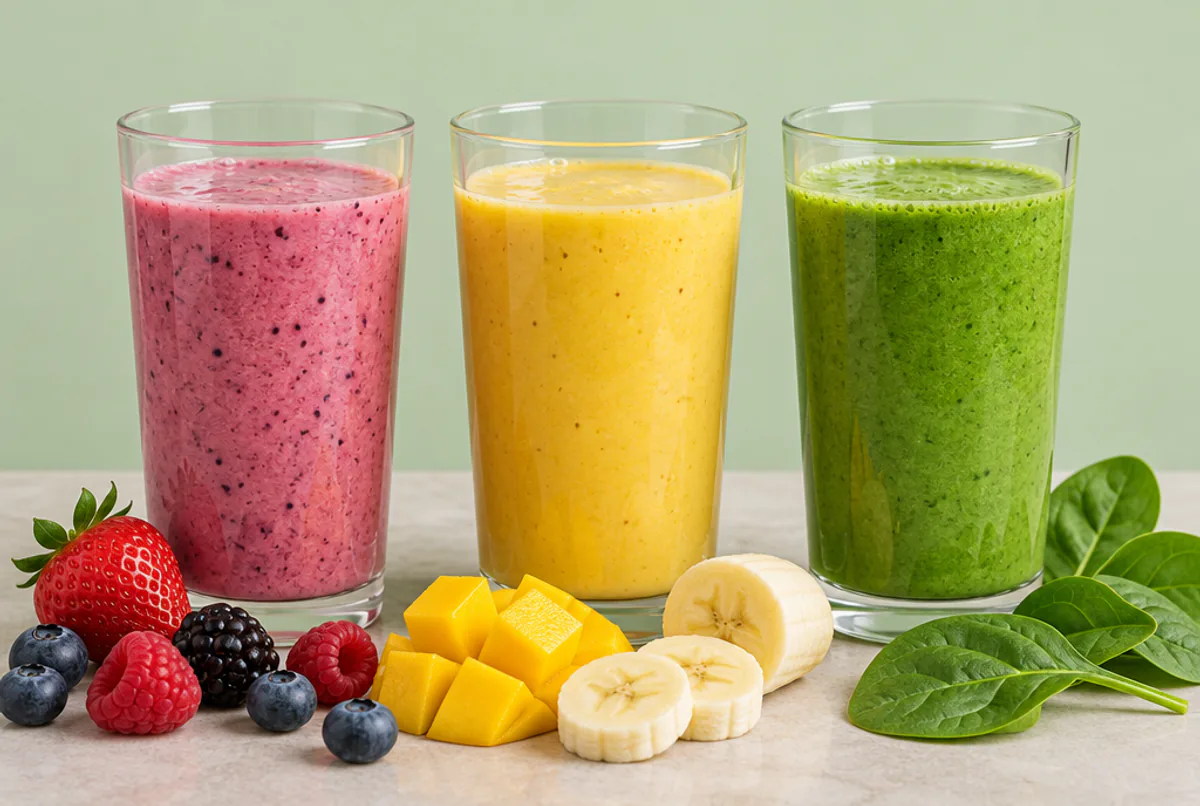
Start from a preset or build your own in four steps: one liquid base, any fruit and vegetables, something creamy or filling, and extras. Change any amount and the total updates straight away. Frozen fruit has about the same calories as fresh by weight.
Where the calories come from
In most smoothies the biggest swings come from:
- The liquid. Orange juice and whole or 1% milk add far more than water or unsweetened almond milk.
- Nut butters, seeds and avocado. Small spoonfuls carry a lot of energy, mostly from fat.
- Sweeteners. Honey and syrups add sugar without much else.
- Size. A 24 fl oz café smoothie can be two or three of the servings shown here.
Fruit, spinach and plain yogurt add volume, fiber and protein for fewer calories.
Sugars in smoothies
The “sugars” figure is total sugars from all ingredients, including the natural sugars in fruit and milk. Honey and other sweeteners you add count as added sugars. If you are keeping an eye on added sugar, see the added sugar calculator.
Café smoothies
Shop smoothies often use juice, sherbet, frozen yogurt or syrups, and sizes vary. Use the chain’s published numbers where you can. This builder is for smoothies you make at home.
Related tools and guides
Salad Calorie Calculator
Build a salad from greens, toppings, protein and dressing.
Coffee Calorie Calculator
Milk, sugar, syrup and size to calories and caffeine per cup.
Meal Calorie Calculator
Add the foods on your plate and see the meal total.
Recipe Nutrition Calculator
Paste an ingredient list and get calories, macros and a Nutrition Facts panel per serving.
Sources
- U.S. Department of Agriculture, Agricultural Research Service. FoodData Central: SR Legacy (April 2018) and Foundation Foods (October 2026) datasets. Accessed 2026-11-24.