


PCOS Symptom Checker
Polycystic Ovary Syndrome affects 1 in 10 women of reproductive age — yet up to 70% remain undiagnosed. If you are experiencing irregular periods, unexplained weight gain, excess hair growth, or persistent acne, this free PCOS symptom checker can help you understand what may be going on. Answer 4 short steps about your cycle, symptoms, and health history to get a personalized risk score, a Rotterdam Criteria analysis, and clear guidance on what to do next. All answers stay private on your device.
About You
Basic information helps us personalize your PCOS risk assessment.
Menstrual Cycle
Irregular periods are the most common sign of PCOS. Tell us about your cycle.
Your Symptoms
Select all symptoms you currently experience or have noticed. You can choose multiple.
Health History
These details help refine your PCOS risk assessment significantly.
These symptoms are commonly associated with PCOS but may also have other causes. A doctor can determine the true cause.
- 1A 5–10% reduction in body weight (if overweight) can restore ovulation and significantly improve PCOS symptoms.
- 2Choose low glycemic index (GI) carbohydrates — oats, sweet potato, legumes — to stabilize blood sugar and reduce insulin resistance.
- 3Exercise 150+ minutes per week — a mix of cardio and resistance training is most effective for PCOS and insulin sensitivity.
- 4Reduce refined sugar and processed foods — these spike insulin and worsen androgen levels in PCOS.
- 5Prioritize sleep — poor sleep worsens insulin resistance and cortisol levels, both of which aggravate PCOS.
- 6Consider Inositol (Myo-inositol + D-chiro inositol) supplements — research shows benefits for insulin sensitivity and menstrual regularity in PCOS.
- 7Track your cycle — use an app to monitor patterns. This data is extremely valuable for your doctor's assessment.
- 8Manage stress — chronic stress elevates cortisol, which worsens insulin resistance and hormonal imbalance in PCOS.
| Test | What it checks |
|---|---|
| Transvaginal Ultrasound | Checks for polycystic ovaries (12+ follicles per ovary) |
| Total & Free Testosterone | High androgen (male hormone) levels — key PCOS marker |
| LH / FSH Ratio | Elevated LH:FSH ratio (often >2:1 in PCOS) indicates hormonal imbalance |
| Fasting Insulin & Glucose | Detects insulin resistance — present in up to 70% of PCOS cases |
| HbA1c | 3-month average blood sugar level — screens for pre-diabetes |
| AMH (Anti-Müllerian Hormone) | Elevated AMH is highly indicative of PCOS |
| Thyroid Function (TSH, T3, T4) | Rules out thyroid disorder which can mimic PCOS symptoms |
| Prolactin | Rules out hyperprolactinemia as a cause of irregular periods |
What Is PCOS?
Polycystic Ovary Syndrome (PCOS) is one of the most common hormonal disorders affecting women of reproductive age worldwide. It is estimated that 6 to 13% of women experience PCOS. Despite being so common, up to 70% of women with PCOS have not been diagnosed.
PCOS is not simply a condition of the ovaries. It is a complex hormonal and metabolic disorder that affects your entire body — your periods, your skin, your weight, your fertility, and your long-term health. PCOS occurs when inappropriate hormonal signaling leads to higher than normal androgen levels and other hormonal imbalances. As a result, women with PCOS may experience irregular or infrequent menstrual periods, pain, abnormal ovulation, changes in hair, oilier skin, acne, and cysts in the ovaries.
The name “polycystic” can be misleading — not everyone with PCOS has ovarian cysts, and having ovarian cysts does not automatically mean you have PCOS. The diagnosis is based on a specific set of criteria that goes beyond just the ovaries.
PCOS Symptoms — The Complete List
Symptoms of PCOS can differ from person to person, and an individual’s symptoms may change over time. This is one reason why PCOS is so often missed — no two women experience it in exactly the same way. Some women have obvious symptoms from their teenage years; others do not notice anything until they try to get pregnant.
Here are the most common PCOS symptoms, organized by category:
Menstrual Cycle Symptoms
The most recognized sign of PCOS is an irregular or absent menstrual cycle. Irregular periods are often the first sign women notice with PCOS. The hormonal imbalances prevent regular ovulation, which disrupts the normal menstrual cycle.
Signs to watch for include:
- Periods that come more than 35 days apart
- Fewer than 8 periods per year
- No period for 3 or more months (not due to pregnancy)
- Unpredictable or very heavy bleeding
- Very short or very light periods
Skin and Hair Symptoms
Higher androgen levels can cause changes in hair — either excessive facial or body hair or female-pattern baldness — as well as oilier skin and acne.
- Hirsutism (excess hair): This condition affects 7 out of 10 women with PCOS. Unwanted coarse, dark hair on the face, chest, abdomen, or back.
- Acne: Adolescents with severe or treatment-resistant acne may have a 40% chance of developing PCOS. Acne in PCOS typically appears along the jawline, chin, or chest and persists beyond teenage years.
- Hair thinning: Hair loss patterns can vary widely, often appearing in a vertex, crown, or diffuse pattern.
- Dark skin patches (Acanthosis Nigricans): Acanthosis nigricans causes areas of thicker, pigmented skin that might feel velvety, found on the breast, underarms, or back of the neck. This is a strong indicator of insulin resistance.
Weight and Metabolic Symptoms
- Unexplained weight gain or difficulty losing weight
- Weight that accumulates around the abdomen
- Intense cravings for sugar or carbohydrates
- Constant fatigue or low energy
- Blood sugar fluctuations
Mood and Emotional Symptoms
PCOS can adversely impact quality of life in substantial ways, and women with PCOS may experience anxiety, depression, eating disorders, and a negative body image.
- Mood swings linked to the menstrual cycle
- Anxiety or depression
- Low motivation or brain fog
- Sleep problems or insomnia
Fertility Symptoms
- Difficulty getting pregnant
- Infrequent or absent ovulation
- Recurrent miscarriage (in some cases)
What Causes PCOS?
The exact cause of PCOS is not fully understood, but research points to several key factors:
1. Insulin Resistance If your body’s cells stop responding well to insulin, it becomes difficult to absorb blood sugar for fuel. This causes your pancreas to make more insulin, which leads to high blood sugar. The increased insulin also stimulates your ovaries to produce more androgens, leading to PCOS. Insulin resistance is present in up to 70% of PCOS cases — even in women who are not overweight.
2. High Androgen Levels (Hyperandrogenism) Androgens are hormones that all women produce in small amounts. In PCOS, the ovaries produce too much — causing the visible symptoms of excess hair, acne, hair thinning, and irregular periods.
3. Genetics PCOS tends to run in families. It is believed that a combination of genes and environmental factors may be involved in developing the syndrome. If your mother, sister, or aunt has PCOS, your risk is significantly higher.
4. Chronic Inflammation Low-grade inflammation throughout the body stimulates the ovaries to produce more androgens. This may explain why anti-inflammatory diets show benefit in PCOS management.
5. Hormonal Imbalances An imbalance in the ratio of LH (Luteinizing Hormone) to FSH (Follicle Stimulating Hormone) disrupts the normal ovulation process, leading to irregular periods and androgen overproduction.
How Is PCOS Diagnosed? (Rotterdam Criteria Explained)
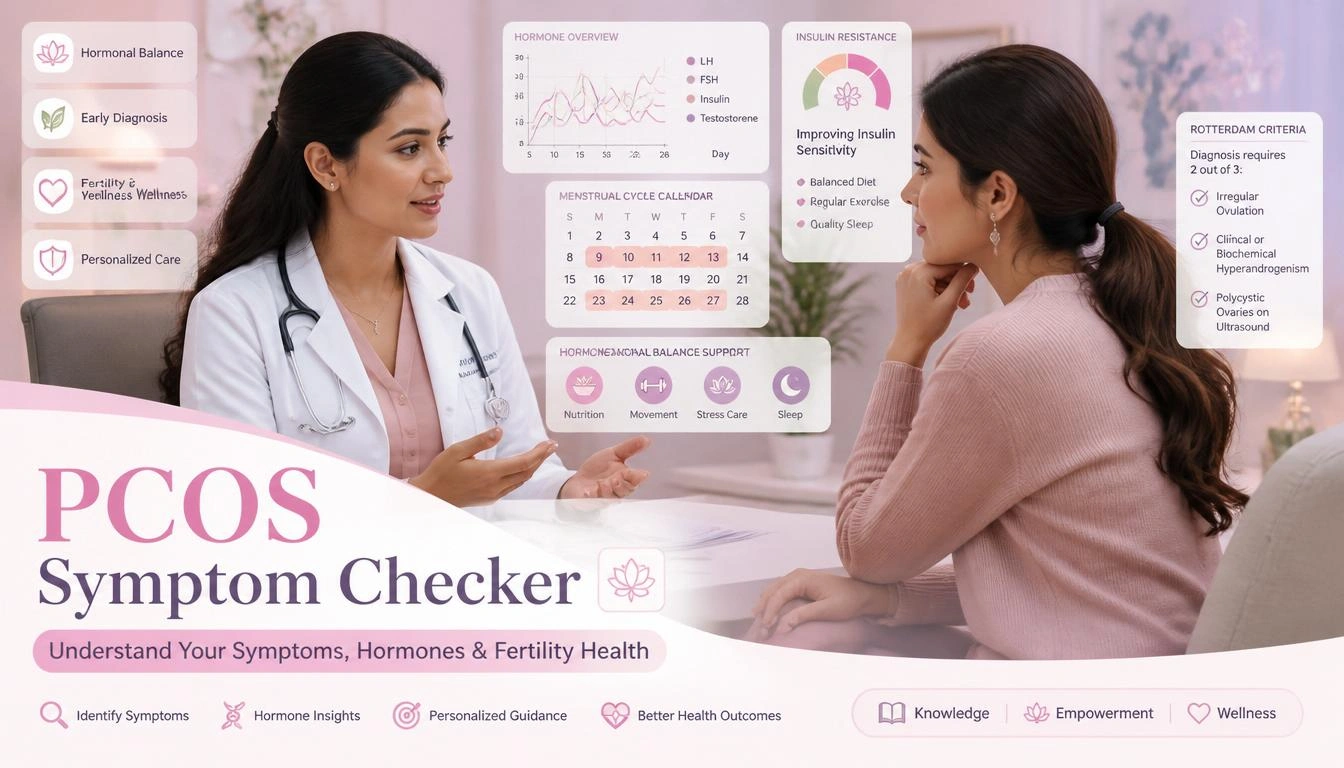
PCOS is diagnosed using the internationally accepted Rotterdam Criteria. A woman is diagnosed with PCOS when she meets at least 2 of these 3 criteria, after other conditions have been ruled out:
Criterion | What It Means |
1. Irregular or absent periods | Fewer than 8 periods per year, or cycles longer than 35 days |
2. High androgen signs | Excess hair growth, acne, hair thinning on bloodwork, or elevated testosterone on blood test |
3. Polycystic ovaries | 12 or more follicles per ovary on ultrasound, or enlarged ovaries |
This means you can have PCOS without ovarian cysts. You can also have ovarian cysts without having PCOS. The combination of criteria — not any single symptom — is what defines the diagnosis.
What Tests Does a Doctor Order?
Blood tests look for high levels of androgens and other hormones. Your healthcare provider may also check your blood glucose levels. And you may have your cholesterol and triglyceride levels checked.
Important tests include: testosterone levels, LH/FSH ratio, fasting insulin and glucose, HbA1c, AMH (Anti-Müllerian Hormone), thyroid function (TSH), and a pelvic ultrasound.
PCOS Risk Levels — Low, Moderate & High
Not all PCOS presentations are the same. This checker assesses your symptoms and classifies your risk:
Risk Level | What It Means | Key Indicators |
Low Risk | Few or no PCOS indicators present | Regular periods, no androgen symptoms, normal weight |
Moderate Risk | Several PCOS-associated symptoms present | Irregular periods or androgen signs, but not both confirmed |
High Risk | Multiple key PCOS criteria met | Irregular periods + androgen signs ± confirmed cysts or high testosterone |
Long-Term Health Risks of Untreated PCOS
PCOS is not just about periods and skin. If left unmanaged, it is associated with serious long-term health conditions:
Type 2 Diabetes: Women with PCOS are 3–7 times more likely to develop Type 2 diabetes due to insulin resistance.
Heart Disease: PCOS is associated with higher cholesterol, elevated blood pressure, and increased cardiovascular risk.
Endometrial Cancer: Women who have had absent or very irregular periods for many years have a higher than average risk of developing cancer of the womb lining (endometrial cancer). But the chance of getting endometrial cancer is still small and can be minimised using treatments to regulate periods.
Sleep Apnoea: Overweight women with PCOS may also develop sleep apnoea, a condition that causes interrupted breathing during sleep.
Mental Health: Depression and mood swings are common because the symptoms of PCOS can affect your confidence and self-esteem.
This is why early diagnosis and management matters enormously — not just for fertility, but for lifelong health.
How to Manage PCOS — Lifestyle & Treatment
There is no cure for PCOS, but it is highly manageable. Treatment is personalized based on your main concern — whether that is periods, skin, weight, or fertility.
Lifestyle Changes (First Line of Treatment)
A 5–10% reduction in body weight (for overweight women) can restore ovulation, reduce androgen levels, and significantly improve nearly all PCOS symptoms. This is the single most effective intervention for many women.
Key lifestyle approaches:
- Low GI diet: Choose oats, sweet potato, legumes, and whole grains over refined carbs and sugar
- Regular exercise: 150+ minutes per week combining cardio and resistance training
- Stress management: Chronic stress raises cortisol, worsening insulin resistance
- Sleep: Poor sleep worsens insulin resistance and hormonal balance
- Inositol supplements: Myo-inositol and D-chiro inositol have shown clinical benefits for insulin sensitivity and menstrual regularity
Medical Treatments
Goal | Common Treatments |
Regulate periods | Combined oral contraceptive pill, Progestogen |
Reduce androgen symptoms | Anti-androgen medications, combined pill |
Improve insulin resistance | Metformin (also helps regulate periods) |
Improve fertility | Letrozole, Clomifene, IVF |
Manage acne/hirsutism | Topical treatments, laser hair removal, spironolactone |
How This PCOS Symptom Checker Works
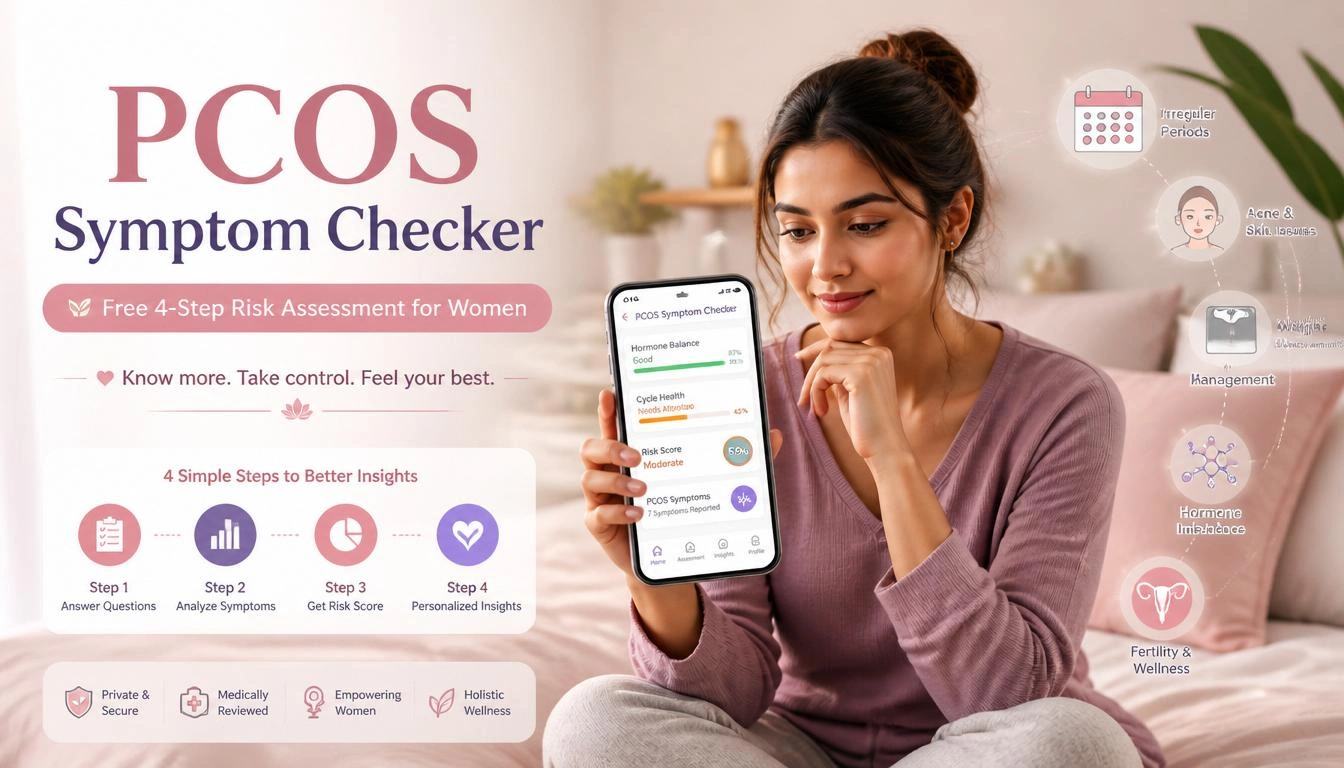
This free tool uses a 4-step quiz to assess your PCOS risk based on clinically recognized indicators:
Step 1 — About You: Age, BMI category, reproductive status, and family history of PCOS or diabetes.
Step 2 — Your Menstrual Cycle: Period regularity, frequency, flow, duration, pain, and whether you have ever missed 3+ months of periods.
Step 3 — Your Symptoms: Multi-select symptom check covering skin and hair changes, weight and energy symptoms, and mood and other signs.
Step 4 — Health History: Whether you have been diagnosed, had an ultrasound, confirmed high androgens, insulin resistance, fertility concerns, and hormonal treatment.
The tool then calculates a risk score out of 100 across four categories — Menstrual Cycle, Androgen Signs, Metabolic Factors, and Clinical History — and provides:
- Risk level (Low, Moderate, or High)
- Rotterdam Criteria analysis based on your answers
- Color-coded symptom tags identifying what you reported
- Personalized recommendations including tests to ask for
- Evidence-based management tips
- Printable summary for your doctor’s appointment
Frequently Asked Questions
Can I have PCOS without irregular periods?
Can teenagers have PCOS?
Does PCOS mean I cannot get pregnant?
Is PCOS the same as having ovarian cysts?
Can birth control mask PCOS symptoms?
What is the best diet for PCOS?
How is this checker different from a medical diagnosis?
What is the Rotterdam Criteria?
MEDICAL DISCLAIMER
This tool is for educational purposes only and is not a medical diagnosis. The information provided does not constitute medical advice and should not replace professional consultation. Always consult a qualified healthcare provider for proper evaluation and treatment. If you have urgent health concerns, contact your doctor or emergency services immediately.