
PMS vs Early Pregnancy Symptoms: The Real Difference Explained
Introduction
PMS vs early pregnancy symptoms can feel almost the same, which is why many women feel confused in the days before their period is due. Both can cause sore breasts, tiredness, and mood changes. This is why so many women feel confused in the days before their period is due.
The truth is, symptoms alone cannot tell you which one it is. The clearest sign is a missed period, followed by a pregnancy test. This article will walk you through the common symptoms of both, how the timing differs, and when it makes sense to test.
Quick Answer
PMS and early pregnancy share many symptoms, like sore breasts and tiredness. There is no symptom that proves one over the other. A missed period and a pregnancy test are the most reliable ways to know.
Quick Comparison
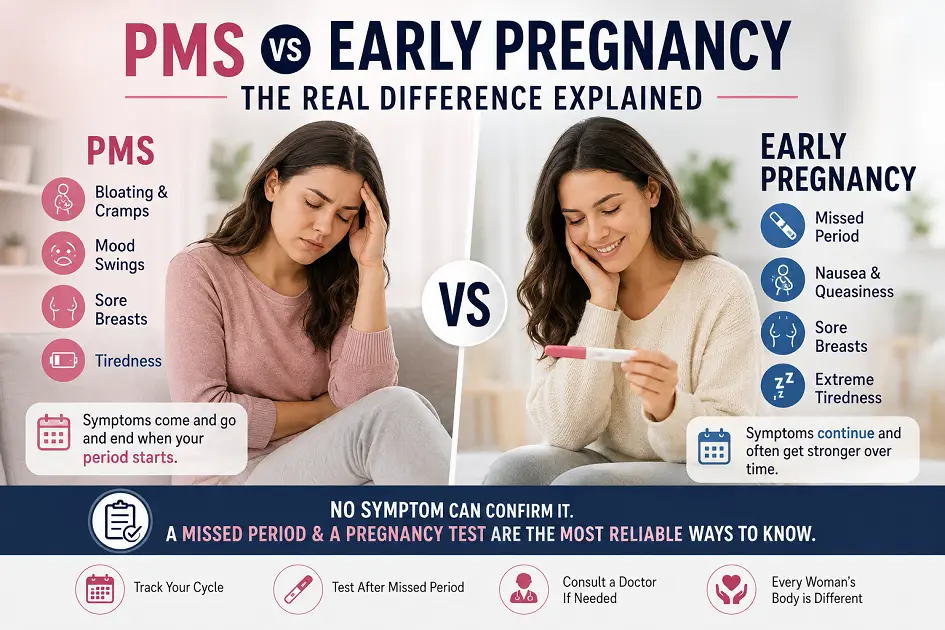
| Feature | PMS | Early Pregnancy |
|---|---|---|
| What it is | Hormone changes before a period | Early signs after an embryo implants |
| Common timing | Starts about 1–2 weeks before your period | Symptoms may start 1–2 weeks after conception |
| Common symptoms | Cramps, bloating, mood swings, sore breasts | Sore breasts, tiredness, nausea, missed period |
| Main causes | Normal shifts in estrogen and progesterone | Rising hCG and progesterone levels |
| How long it lasts | Usually ends when your period starts | Continues and often gets stronger over time |
| How it is checked | Symptoms go away once bleeding starts | Confirmed with a home pregnancy test |
| When to see a doctor | Symptoms that disrupt daily life | Positive test, or no period after 7+ days late |
What Is PMS?
PMS stands for premenstrual syndrome. It happens in the days before your period starts. Your hormone levels, mainly estrogen and progesterone, rise and fall in a normal pattern each month. This shift can affect your mood and body.
Common PMS symptoms include:
- Bloating
- Cramps
- Sore or swollen breasts
- Tiredness
- Mood swings or irritability
- Food cravings
- Trouble sleeping
PMS symptoms usually fade once your period begins. Most women feel back to normal within a day or two of bleeding.
What Is Early Pregnancy?
Early pregnancy begins after an egg is fertilized and implants in the uterus. This usually happens about a week after conception. Your body starts to make a hormone called hCG, which supports the pregnancy and can cause new symptoms.
Common early pregnancy symptoms include:
- A missed period
- Sore or tender breasts
- Nausea, with or without vomiting
- Tiredness that feels stronger than usual
- Needing to pee more often
- Light spotting around the time your period would be due
- A heightened sense of smell
Unlike PMS, these symptoms usually do not go away when your period is due. Instead, they often continue or get stronger over the following weeks.
PMS vs Early Pregnancy Symptoms: Key Differences
Symptom Strength Over Time
PMS symptoms tend to peak right before your period and then fade fast. Early pregnancy symptoms often build slowly and stick around, or get stronger, as the days pass.
The Missed Period
This is the clearest difference. PMS always ends with a period. Early pregnancy does not include a period at all, though some women do have light spotting.
Nausea
Nausea is more closely linked with early pregnancy than PMS. Not every pregnant woman feels nauseous, but PMS rarely causes it.
Symptoms Compared
Shared symptoms:
- Sore breasts
- Tiredness
- Bloating
- Mood changes
More common with PMS:
- Cramps that ease once bleeding starts
- Symptoms that follow the same monthly pattern
More common with early pregnancy:
- Nausea, especially in the morning
- Missed period
- Symptoms that continue past when your period was due
Symptoms that should not be ignored:
- Severe pelvic pain
- Heavy bleeding with large clots
- Fainting or dizziness with pain
- A positive pregnancy test with sharp one-sided pain
If you notice any of these, contact a doctor or other qualified health professional right away.
Timing and Duration
PMS symptoms usually show up about 1 to 2 weeks before your period and stop once bleeding starts. This pattern tends to repeat each month.
Early pregnancy symptoms can start around the time your period is due, since implantation often happens about a week after conception. Because the timing overlaps so closely with PMS, timing alone cannot tell you which one you are experiencing. If you are trying to track your cycle to better understand your timing, Period Cycle Calculator can help you estimate when your next period is due and spot patterns from month to month.
Causes and Risk Factors
PMS is linked to the normal rise and fall of estrogen and progesterone during your monthly cycle. Stress, diet, and sleep can make PMS symptoms feel stronger for some women.
Early pregnancy symptoms are caused by rising hormone levels, mainly hCG and progesterone, after an embryo implants in the uterus. These hormones prepare your body to support a pregnancy.
How Is the Difference Confirmed?
The only reliable way to tell PMS from early pregnancy is time and testing.
- Wait for your period. If it arrives, it was PMS.
- Take a home pregnancy test. These test for hCG in urine and are most accurate after a missed period.
- See a doctor for a blood test if you want an earlier or more sensitive result.
If you’re unsure exactly when to expect your period or want help planning when to test, Period Cycle Calculator can give you a helpful estimate. And if a test comes back positive, Pregnancy Due Date Calculator can help you get a general sense of your timeline going forward.
When Should You See a Doctor?
Visit to a doctor or other qualified health professional if:
- You have a positive pregnancy test
- Your period is more than 7 days late with no clear reason
- You have severe pain, heavy bleeding, or fainting
- Your PMS symptoms are so severe they disrupt work, school, or daily life
If you find out you are pregnant, Pregnancy Assistant can help you understand what to expect in the weeks ahead and organize helpful information as your pregnancy progresses.
What to Keep in Mind
Symptom comparisons like this one are meant to help you understand common patterns. They cannot replace a pregnancy test or a doctor’s evaluation. Every woman’s body is different, and symptoms can vary a lot from person to person and month to month.
FAQ
Final Takeaway
PMS vs early pregnancy symptoms can be difficult to distinguish because many signs overlap, including sore breasts, tiredness, bloating, and mood changes. The most reliable way to know which one you’re experiencing is to wait for your period or take a pregnancy test. If your symptoms are severe or you’re still unsure, talk to a doctor or other qualified health professional.
Medical Disclaimer: This article is for general educational purposes only and is not a substitute for professional medical advice, diagnosis, or treatment.