
What to Eat in First Trimester: Complete Pregnancy Meal Plan (Week by Week)
Table of Contents
Congratulations on your pregnancy! The first trimester (weeks 1–12) is one of the most important — and most challenging — times to eat well. Your body is building your baby’s brain, heart, and spine from scratch, all while you may be battling nausea, food aversions, and exhaustion.
This week-by-week first trimester meal plan takes the guesswork out of eating well in early pregnancy. Whether you can barely keep crackers down or you’re ready to plan full meals, this guide meets you where you are.
Why Your First Trimester Diet Matters So Much
In the first 12 weeks, your baby grows from a cluster of cells to a fully formed fetus. Key developments happening right now include:
- Neural tube formation (brain and spinal cord) — weeks 3–4
- Heart begins beating — around week 6
- All major organs start forming — weeks 6–10
- Bone and muscle development begins — weeks 10–12
The nutrients you eat directly fuel each of these milestones. A thoughtful first trimester meal plan ensures your baby gets what it needs — even on days when eating feels impossible.
Week 1–4: Nausea-Friendly Foods to Keep You Going
Many women don’t know they’re pregnant in weeks 1–2, but by weeks 3–4, symptoms like nausea, fatigue, and food aversions often begin. The goal here is simple: eat what you can, when you can.
Key Nutrients: Folate, Vitamin B6, Zinc
Folate is the most critical nutrient in early pregnancy — it prevents neural tube defects and must be present before most women even know they’re pregnant. Aim for 400–600 mcg daily from food and supplements.
Best Foods for Weeks 1–4
| Food | Why It Helps |
|---|---|
| Plain crackers or toast | Settles nausea, especially on an empty stomach |
| Bananas | Gentle on stomach, rich in B6 which reduces nausea |
| Ginger tea or ginger chews | Clinically shown to reduce morning sickness |
| Avocado | Folate-rich, healthy fats, easy to eat |
| Lentil soup | Folate + iron without strong smell |
| Plain yogurt | Protein + probiotics, cooling effect on nausea |
| Cold foods (fruit, smoothies) | Smell less strong than hot foods — easier to tolerate |
Sample Day: Weeks 1–4
Breakfast: Dry toast with banana slices + ginger tea
Mid-morning: Plain crackers + small handful of almonds
Lunch: Cold lentil salad with cucumber and lemon dressing
Snack: Plain yogurt with a drizzle of honey
Dinner: Plain rice with steamed vegetables and a little butter
Before bed: Crackers or a small piece of fruit (helps with overnight nausea)
Tip: Eat small amounts every 1–2 hours instead of three big meals. An empty stomach makes nausea worse.
Week 5–8: Folate-Rich Meal Ideas for Baby’s Brain Development
By weeks 5–8, your baby’s neural tube should be closing, and brain development is in full swing. This is the most critical window for folate intake. Even if nausea is still present, try to prioritize folate-rich foods at every meal.
Key Nutrients: Folate, Choline, Vitamin C, Magnesium
Choline — found in eggs and meat — works alongside folate for neural tube health. Many prenatal vitamins don’t include enough choline, so food sources matter.
Best Foods for Weeks 5–8
| Food | Folate Content |
|---|---|
| Lentils (½ cup cooked) | 180 mcg |
| Spinach (1 cup cooked) | 262 mcg |
| Black beans (½ cup) | 128 mcg |
| Asparagus (½ cup) | 134 mcg |
| Avocado (1 medium) | 122 mcg |
| Eggs (2 large) | 47 mcg + choline |
| Broccoli (1 cup) | 57 mcg |
| Fortified cereals (1 serving) | Up to 400 mcg |
Sample Day: Weeks 5–8
Breakfast: Scrambled eggs with spinach + fortified whole-grain toast
Snack: Avocado on rice crackers
Lunch: Lentil and vegetable soup with a side of black bean salad
Snack: Sliced mango (high in folate + Vitamin C)
Dinner: Salmon with steamed asparagus and brown rice
Dessert: A small bowl of strawberries (folate + antioxidants)
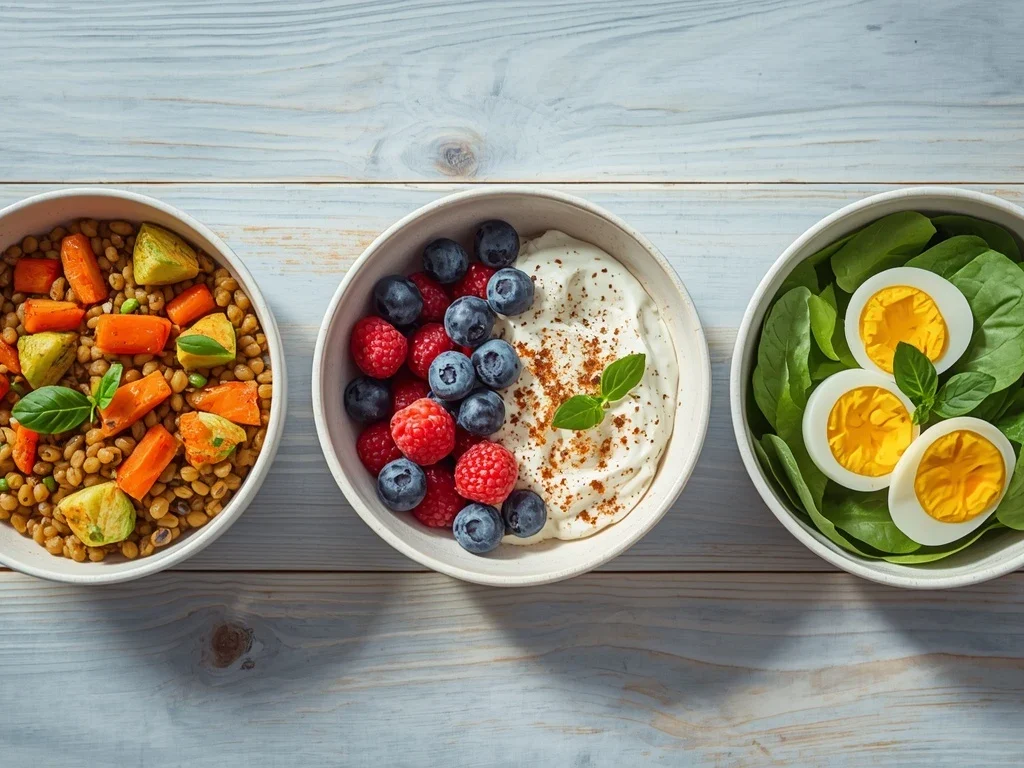
Tip: Vitamin C helps your body absorb folate from plant foods. Pair leafy greens with a squeeze of lemon or a glass of orange juice.
Folate-Rich Smoothie Recipe (Great for Nausea Days)
Blend together: 1 cup spinach, 1 frozen banana, ½ cup mango, 1 cup coconut water, and 1 tsp chia seeds. This delivers over 150 mcg of folate in one glass with a mild, pleasant flavour.
Week 9–12: Iron & Protein Focus for Growing Baby
By week 9, your blood volume is increasing rapidly — it will expand by up to 50% by the end of pregnancy. This means your iron needs increase significantly. Protein is also essential as your baby’s muscles and tissues develop quickly.
Key Nutrients: Iron, Protein, Calcium, Omega-3 Fatty Acids
Iron target: 27 mg/day during pregnancy (up from 18 mg pre-pregnancy)
Protein target: 70–100 g/day (up from 46 g pre-pregnancy)
Best Iron-Rich Foods for Weeks 9–12
Animal sources (heme iron — most easily absorbed):
- Lean beef or lamb
- Chicken thighs (dark meat has more iron)
- Canned sardines or tuna
- Liver (limit to once a week due to high Vitamin A)
Plant sources (non-heme iron — pair with Vitamin C):
- Lentils, chickpeas, kidney beans
- Tofu and edamame
- Pumpkin seeds
- Dark leafy greens (spinach, kale)
- Dried apricots and raisins
Best Protein Sources
- Eggs (complete protein + choline)
- Greek yogurt (17g per cup)
- Chicken breast
- Salmon (also provides Omega-3 DHA for brain development)
- Lentils and beans (also give iron)
- Cottage cheese
- Nuts and nut butters
Sample Day: Weeks 9–12
Breakfast: Greek yogurt parfait with berries and granola + orange juice
Snack: Boiled egg + a small handful of pumpkin seeds
Lunch: Grilled chicken salad with spinach, chickpeas, cherry tomatoes, and lemon dressing
Snack: Whole-grain toast with almond butter and banana
Dinner: Beef stir-fry with broccoli, bell peppers, and brown rice
Evening snack: Cottage cheese with peach slices
Iron absorption tip: Avoid drinking tea or coffee with meals — tannins block iron absorption. Drink them between meals instead.
Foods to Avoid in the First Trimester
While focusing on what to eat, also keep these off the menu:
- High-mercury fish — shark, swordfish, king mackerel, bigeye tuna
- Raw or undercooked meat and eggs — risk of salmonella and listeria
- Unpasteurized dairy and soft cheeses — brie, camembert, feta (unless cooked)
- Deli meats and hot dogs — listeria risk unless heated until steaming
- Raw sprouts — can carry bacteria
- Excess caffeine — limit to under 200 mg/day (1 small coffee)
- Alcohol — no safe amount during pregnancy
First Trimester Eating Tips for Tough Days
Even the most carefully planned diet will go off-track during the first trimester. Here is what actually helps:
When nausea is severe: Focus on cold foods, bland carbohydrates, and anything that smells neutral. Even plain crackers and a prenatal vitamin is a win some days.
When food aversions hit: Swap any food you can’t tolerate with a nutritional equivalent. Can’t face meat? Try lentils for protein and iron. Can’t stand eggs? Try Greek yogurt.
When fatigue is overwhelming: Keep simple, no-cook options ready — yogurt cups, pre-cut fruit, nut butter packs, boiled eggs made in batches.
When everything tastes metallic: A common first trimester symptom. Cold foods, citrus flavours, and plastic cutlery (instead of metal) can help.
Your Free Pregnancy Meal Planner Tool
Planning meals while pregnant — especially when symptoms are unpredictable — is genuinely hard. That’s exactly why we built a free pregnancy meal planner designed for each trimester.
What the Tool Does
- Generates a personalised weekly meal plan based on your trimester and food preferences
- Tracks key nutrients: folate, iron, protein, calcium, and DHA
- Adjusts for nausea, dietary restrictions, and food aversions
- Creates a ready-to-use shopping list automatically
→ Use the Free Pregnancy Meal Planner Tool
No sign-up required. Takes 2 minutes to set up and saves hours of planning every week.
First Trimester Meal Plan: Quick Reference Summary
| Weeks | Focus | Top Foods |
|---|---|---|
| 1–4 | Nausea management + folate | Crackers, banana, ginger, avocado, lentils |
| 5–8 | Neural tube development | Spinach, eggs, lentils, asparagus, fortified cereals |
| 9–12 | Blood volume + muscle growth | Lean meat, Greek yogurt, chickpeas, salmon, leafy greens |
Frequently Asked Questions
Is it normal to eat very little in the first trimester?
Yes, completely normal. Nausea and aversions make eating difficult for many women. Focus on getting your prenatal vitamin daily and eating whatever you can tolerate. Your body is resilient and your baby is very small — it will prioritise its own needs from your nutrient stores.
Should I eat for two in the first trimester?
No. In the first trimester, you need almost no extra calories — only about 0–100 extra calories per day. Quality matters far more than quantity at this stage.
What if I can’t take my prenatal vitamin because it makes me sick?
Try taking it with food, at a different time of day, or switching to a gummy version. Some women find taking it before bed helps. Talk to your doctor if it remains a problem — they may suggest a different formulation.
Can I follow a vegetarian or vegan diet in the first trimester?
Yes, with careful planning. Focus on lentils, beans, tofu, fortified foods, and nuts for iron and protein. Make sure your prenatal vitamin includes B12, iron, and DHA (from algae-based omega-3).
This article is for informational purposes only and does not replace medical advice. Always consult your doctor or midwife about your individual nutritional needs during pregnancy.