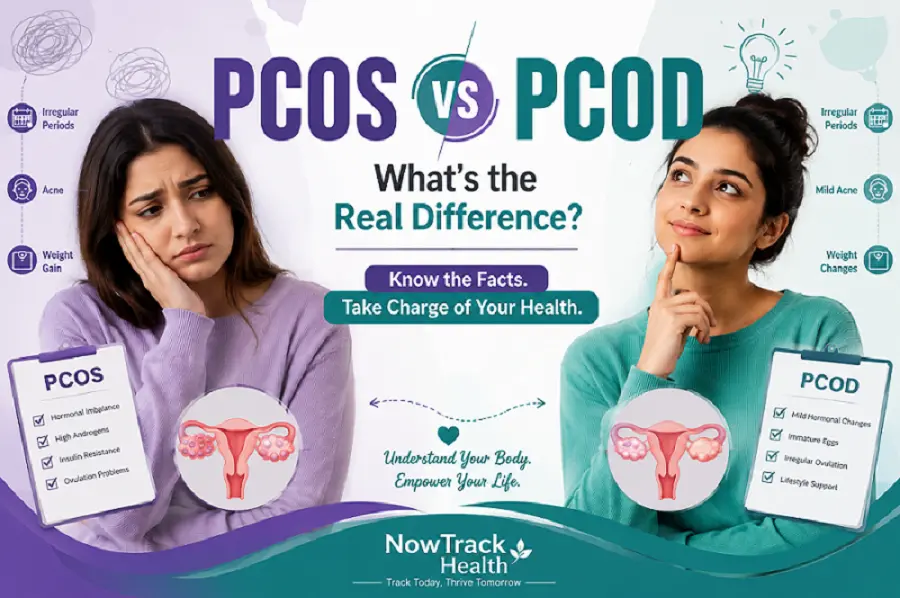
PCOS vs PCOD: What’s the Real Difference?
Introduction
PCOS and PCOD are two terms you’ll hear a lot when it comes to women’s hormone health. Many people use them like they mean the exact same thing. They don’t.
PCOD is a common, informal term for a condition where the ovaries release immature eggs. PCOS is the medical term used in clinics and research, and it describes a broader condition that affects hormones, ovulation, and often metabolism too. In this article, you’ll learn what each term really means, how their symptoms compare, what causes them, and how they’re diagnosed and managed.
Quick answer: PCOS is the established medical term for a hormonal and metabolic condition affecting the ovaries and the whole body. PCOD is a term still used in some regions to describe a milder pattern of immature egg release. They overlap a lot, but PCOS is the more clinically recognized and researched diagnosis.
What Is PCOS?
PCOS stands for polycystic ovary syndrome. As of May 2026, medical groups including the Endocrine Society and the American Society for Reproductive Medicine began using a new name for this condition: polyendocrine metabolic ovarian syndrome, or PMOS. The change happened because the old name focused too much on ovarian cysts, which aren’t even true cysts they’re small, immature follicles. You will likely still see “PCOS” on medical forms and in most search results for the next few years, since the change is rolling out gradually through 2028.
Whatever it’s called, the condition works the same way. PCOS/PMOS happens when your ovaries make higher-than-normal levels of androgens, which are often called “male hormones.” This can stop regular ovulation, meaning your ovaries don’t release an egg every month like they normally would. Because PCOS is linked to the whole endocrine system, it can also affect how your body uses insulin, which is why it’s often described as a metabolic condition too.
Common PCOS symptoms include:
- Irregular or missed periods
- Acne
- Extra hair growth on the face or body
- Thinning hair on the scalp
- Weight gain, especially around the belly
- Trouble getting pregnant
Not everyone with PCOS has every symptom. Some women have mild symptoms, while others have more noticeable ones.
What Is PCOD?
PCOD stands for polycystic ovarian disease. It’s a term you’ll see a lot, especially in South Asia and a few other regions, but it isn’t a globally standardized medical diagnosis the way PCOS is.
PCOD is usually described as a condition where the ovaries release many immature or partially mature eggs. Over time, these can build up inside the ovaries. This pattern is often linked with irregular periods and mild hormone changes.
Because PCOD isn’t used consistently across medical systems, you may find different explanations of it depending on where you look. Some sources treat it as a milder version of PCOS. Others use PCOD and PCOS interchangeably. This is one of the biggest reasons women feel confused when researching their symptoms online.
PCOS vs PCOD: Key Differences
| Feature | PCOS | PCOD |
|---|---|---|
| Meaning | Established medical term (also newly called PMOS) for a hormonal and metabolic condition | Informal or regional term for a pattern of immature egg release |
| Hormonal changes | Often involves higher androgen levels and insulin resistance | Usually milder hormone shifts |
| Ovulation | Ovulation is often irregular or absent | Ovulation may still happen, just irregularly |
| Common symptoms | Irregular periods, acne, excess hair, weight changes, possible insulin resistance | Irregular periods, mild acne, weight changes |
| Fertility | Can make conception harder, though pregnancy is often still possible with care | Usually has a smaller impact on fertility |
| Metabolic health | More closely linked with long-term metabolic and cardiovascular risk | Less consistently linked with metabolic risk |
| Diagnosis | Diagnosed using symptoms, blood tests, and sometimes ultrasound | Often identified through symptoms and ultrasound findings alone |
| Management | May need lifestyle changes plus medical treatment | Often managed mainly with lifestyle changes |
PCOS vs PCOD Symptoms
Many symptoms overlap between the two, which is exactly why they get confused so often.
Shared symptoms can include:
- Irregular periods
- Acne or oily skin
- Extra facial or body hair
- Hair thinning on the scalp
- Weight changes
- Ovulation problems
- Trouble becoming pregnant
Symptoms vary a lot from woman to woman. Two people with the same diagnosis can have very different experiences. This is why symptoms alone should never be used to self-diagnose either condition.
What Causes PCOS and PCOD?
Doctors don’t fully understand what causes PCOS or PCOD, but a few factors seem to play a role:
- Hormones — higher-than-typical androgen levels can disrupt ovulation
- Genetics — having a close family member with PCOS or PCOD may raise your risk
- Insulin resistance — when your body doesn’t use insulin well, it can push androgen levels higher
- Other metabolic factors — inflammation and metabolism may also play a part
It’s important to know that being overweight, eating a certain way, or not exercising enough does not, by itself, cause PCOS or PCOD. These conditions come from a mix of factors, many of which are outside a person’s control.
How Are PCOS and PCOD Diagnosed?
A proper diagnosis should always come from a qualified healthcare professional, not from symptoms or an ultrasound alone.
Doctors usually look at:
- Your medical history
- Your period history and patterns
- Your symptoms
- A physical exam
- Blood tests to check hormone levels
- An ultrasound, when appropriate
An ultrasound showing multiple small follicles is not enough on its own to diagnose PCOS. Many women without PCOS have ovaries that look similar on a scan, and some women with PCOS have ovaries that look typical. Blood work and symptom history matter just as much.
PCOS vs PCOD and Fertility
Both conditions can affect ovulation, which is the release of an egg each month. When ovulation is irregular, it can take longer to get pregnant.
That said, fertility challenges do not affect every woman with PCOS or PCOD. Many women with either condition go on to have healthy pregnancies, sometimes with no extra help and sometimes with support like ovulation tracking or fertility treatment.
If you’re planning for pregnancy, you should have to review helpful areas of health before trying to conceive. If you want to better understand your cycle patterns while trying to figure out ovulation, Period Cycle Calculator can also help.
PCOS vs PCOD: Which Is More Serious?
There isn’t one simple answer here. PCOS is more often linked with longer-term reproductive, hormonal, and metabolic health concerns, including insulin resistance. PCOD is often described as milder, but “milder” doesn’t mean it should be ignored.
Severity really depends on the individual. Some women with a PCOD type diagnosis have significant symptoms, while some women with PCOS have mild ones. This is why ongoing care from a doctor matters more than the label itself.
PCOS vs PCOD Treatment and Management
There’s no cure for either condition, but both can be managed well. Common approaches include:
- Eating balanced, regular meals
- Getting regular physical activity
- Prioritizing good sleep
- Managing stress
- Working toward a healthy weight, when appropriate for you
- Tracking and managing your menstrual cycle
- Treating acne or excess hair with a dermatologist’s guidance
- Medicines prescribed by a doctor, when needed
- Fertility treatment, if you’re trying to conceive and need support
- Monitoring blood sugar and metabolic health, especially with PCOS
A doctor can help you build a plan that fits your specific symptoms and goals. This article can’t recommend medicines or doses, since that needs to come from someone who knows your full health picture.
Can Diet Help With PCOS or PCOD?
Diet can support symptom management, but there’s no single food or “miracle diet” that fixes PCOS or PCOD. Be cautious of any source that claims otherwise.
Helpful eating patterns often include:
- Balanced meals with protein, fiber, and healthy fats
- Whole grains and vegetables
- Limiting highly processed foods and added sugar where possible
- Eating regularly instead of skipping meals
Avoid extreme fasting, detox plans, or unproven supplements. Nutrition needs are different for every woman, so it’s worth talking to a doctor or dietitian about what fits your body.
Lifestyle Changes That May Help
Small, consistent habits often help more than big, short-term changes. Consider:
- Moving your body regularly, in a way you enjoy
- Keeping a consistent sleep schedule
- Eating balanced meals
- Practicing stress management, like deep breathing or short walks
- Sticking with the treatment plan your doctor recommends
- Going to regular checkups, even when symptoms feel stable
Be kind to yourself during this process. Managing PCOS or PCOD is a long-term effort, not something to fix overnight.
Can Thin Women Have PCOS?
Yes. PCOS is not only linked with weight gain. Some women with PCOS have a typical or lower body weight and still have irregular ovulation, higher androgen levels, and other symptoms. This is sometimes called “lean PCOS.” Diagnosis still depends on symptoms and testing, not body size.
Does PCOD Turn Into PCOS?
PCOD does not “turn into” PCOS in a medical sense. Since PCOD isn’t a standardized diagnosis, some of what gets called PCOD may actually meet the criteria for PCOS from the start, or it may stay a mild pattern of symptoms. This is part of why getting a clear diagnosis from a doctor matters more than the label you start with.
PCOS and PCOD During Pregnancy
Getting pregnant with PCOS or PCOD is possible for many women, though it may take more time or support for some. During pregnancy, women with PCOS may have a higher chance of certain complications, such as gestational diabetes, so doctors often recommend closer monitoring. This doesn’t mean complications are guaranteed — it just means extra care can help catch and manage issues early.
PCOS vs PCOD in Teenagers
Irregular periods and acne are common in the teenage years anyway, which can make PCOS or PCOD harder to spot early on. Doctors are often more cautious about diagnosing these conditions in teens, since hormone patterns are still settling. If a teenager has ongoing irregular periods, strong acne, or excess hair growth, it’s worth discussing with a doctor rather than assuming it will resolve on its own.
Common Myths About PCOS and PCOD
- Myth: You must have cysts on your ovaries to have PCOS. Not true — many women with PCOS don’t have visible cysts, and the “cysts” seen on scans are usually immature follicles, not true cysts.
- Myth: PCOS always causes weight gain. Not true — some women with PCOS maintain a typical weight.
- Myth: You can’t get pregnant with PCOS or PCOD. Not true — many women with either condition become pregnant, sometimes with support.
- Myth: PCOD is not a real health issue. Not true — even when milder, it deserves attention and care.
When Should You See a Doctor?
Talk to a doctor or other qualified health professional if you notice:
- Very irregular periods
- Missing periods for several months
- Heavy or unusual bleeding
- Trouble becoming pregnant after trying for a while
- New or worsening acne, hair growth, or hair thinning
- Symptoms that are affecting your daily life
What to Keep in Mind
This article is meant to help you understand PCOS and PCOD in simple terms. It cannot diagnose you or replace a conversation with a healthcare professional. If you recognize symptoms in yourself, the most useful next step is booking an appointment to talk it through.
Frequently Asked Questions
Final Takeaway
PCOS and PCOD are related but not identical. PCOS is the medically recognized term, now transitioning to PMOS, for a broader hormonal and metabolic condition, while PCOD is a milder, less standardized term used in some regions. Both can affect your periods, skin, hair, weight, and fertility, and both deserve proper medical attention rather than guesswork. If you notice ongoing symptoms, the best next step is talking with a doctor who can guide you toward an accurate diagnosis and a plan that works for you.
Medical Disclaimer: This article is for general education and does not replace advice, diagnosis, or treatment from a qualified healthcare professional.